September 19, 2026 • Maren Calloway • 10 min reading time • Prices verified June 6, 2026
Chalk Markers for Temporary Hair Color, Classroom Windows, and Car Glass: One Product, Wildly Different Use Cases
Chalk markers — sometimes called liquid chalk markers or wet-erase markers — look like oversized felt-tip pens, but instead of ink they hold a water-based chalk suspension: liquid chalk that dries opaque on contact, then wipes clean with a damp cloth. They were invented for restaurant menu boards and retail signage, and that’s still their core job. But if you spend any time reading buyer reviews for popular chalk marker sets, you start noticing a pattern: people aren’t just using these on sandwich boards. They’re dragging them through their hair. They’re decorating car windows for road trips and graduation parades. Teachers are writing assignments on glass partitions instead of whiteboards. One product, sold for one purpose, keeps migrating into completely different hands for completely different reasons — and the off-label data is surprisingly useful if you know how to read it.
This article synthesizes what buyers actually report across those three use cases — hair color, car glass, and classroom or commercial windows — names the real trade-offs, and ends with a clear decision rule for each scenario. We research and synthesize; we have not personally tested any of these products or applications, and we say so clearly.
| EDITOR'S PICKWindow Chalk Markers for Cars G… | Mid-tierBandle B. Chalk Markers - 8 Vib… | Budget pickBold Chalk Markers - Dry Erase… | |
|---|---|---|---|
| Colors included | 16 | 8 | 8 |
| Tip size | 10mm | — | — |
| Reversible tip | — | ✓ | ✓ |
| Water-based | — | ✓ | — |
| Erasable | Washable | ✓ | Dry erase |
| Non-toxic | — | ✓ | — |
| Price | $22.99 | $7.99 | $7.99 |
| See on Amazon → | See on Amazon → | See on Amazon → |
The Hair Color Discovery: What One Buyer’s Off-Label Report Actually Tells Us
The single most unexpected find in chalk marker buyer reviews is an unprompted report of using Bold Chalk Markers as temporary hair color. The reviewer benchmarks them favorably against color waxes and conditioning color sticks — specifically calling out easier, more even application even on brunette hair, and confirming the color washes out cleanly with water.
This is the kind of review that earns credibility precisely because nobody asked for it. The buyer wasn’t answering a prompt; they were reporting a genuine discovery.
What the data point actually tells you — and doesn’t:
Bold Chalk Markers use a water-based pigment formula. That matters because water-based equals water-removable. The mechanism is the same whether you’re writing on a blackboard or coating a strand of hair: the chalk suspension sits on the surface without chemically bonding, and plain water dissolves it. Good Housekeeping’s chalk marker staff evaluation overview confirms that water-based liquid chalk markers are designed for non-porous surfaces and clean up with a damp cloth — which is functionally what hair is for this purpose, a surface that doesn’t absorb pigment the way a porous chalkboard or painted wall would.
The real trade-offs for hair use:
| Factor | What reviewers report |
|---|---|
| Application on brunette hair | Easier than wax sticks; color shows with direct application |
| Washout | Confirmed water-soluble; no reviewer reports staining |
| Tip precision | Chisel tip allows streak-style color; bullet tip for smaller sections |
| Messiness | Wet formula can transfer to clothing before it dries |
The honest risk: no reviewer has documented this across repeated uses or described what happens in rain or sweat. This is a one-time-event use case — parade, costume party, school spirit day — not a weekly color routine. If you’re going for something more durable for a week-long festival, color waxes have a documented edge in longevity. But for wash-out-tonight convenience, the buyer consensus is clear.
If X, then Y: If you need bright temporary color that washes out the same night and you’re starting from a non-bleached base, Bold Chalk Markers are worth trying. If you need color that survives two days of sweat and humidity, reach for a dedicated color wax instead.
Car Window Art: The Durability Numbers That Actually Matter
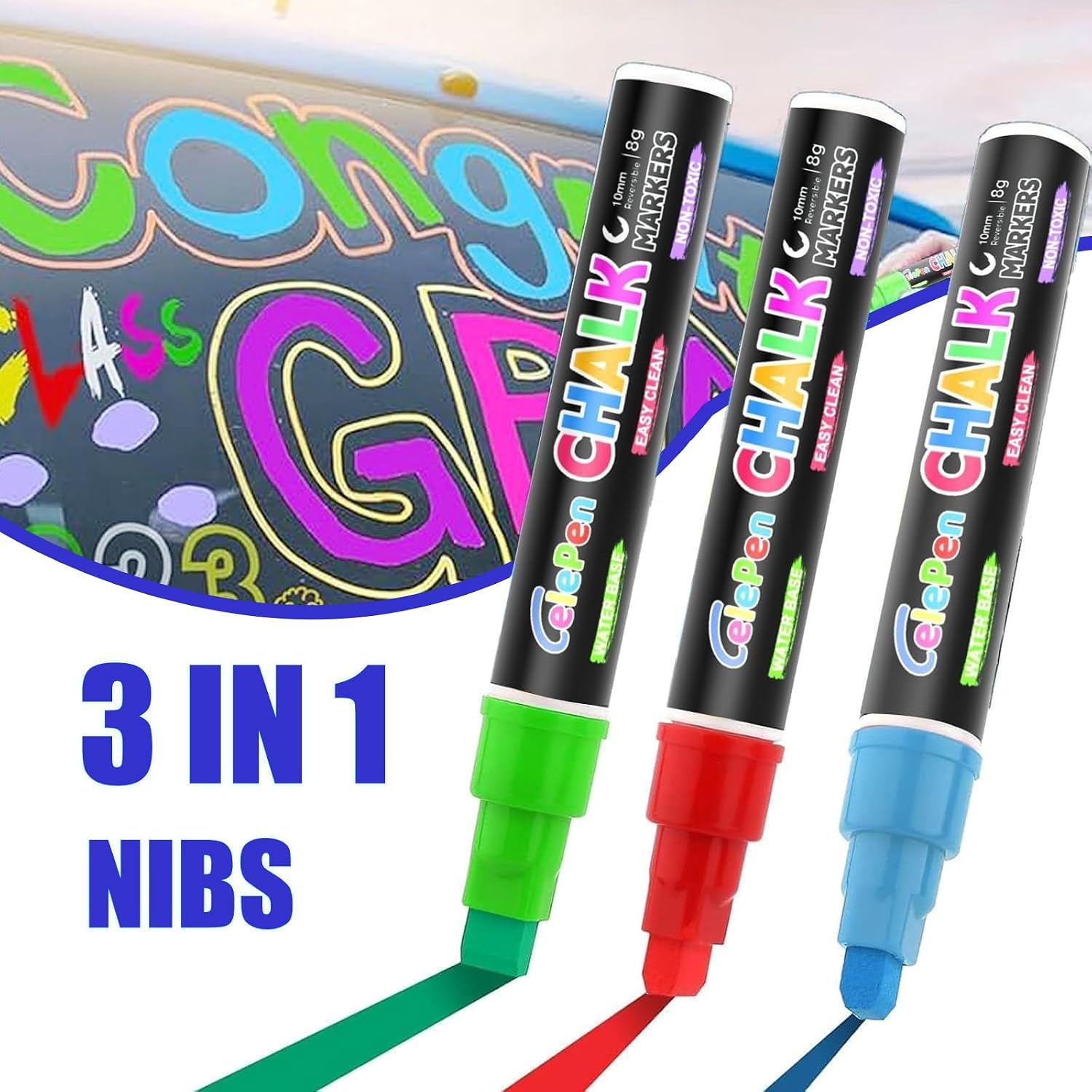
The car window chalk marker category generates some of the most precise real-world performance data in the entire chalk marker review ecosystem — which makes sense, because the stakes feel higher. Nobody wants their “JUST MARRIED” window art to dissolve in the first drizzle, and nobody wants to spend forty minutes scrubbing old marker off a windshield before a road trip.
Two products in this space — a set marketed specifically as liquid chalk markers for car windows and a closely related companion set from the same product family — have accumulated genuinely useful field data from buyers. Rather than referencing product ID strings, it’s more useful to describe what the review record shows across this product category as a whole:
- One reviewer documents removal at 90°F ambient heat in a single car wash cycle — specifically noting the markers came off without scrubbing, which matters for anyone worried about residue baking onto glass in summer heat.
- A separate reviewer confirms that designs survived multiple rain showers intact before the owner chose to remove them.
These two data points answer the two biggest buying questions in opposite directions, and that’s not a contradiction — it’s a formula. Rain does not equal removal, but heat plus agitation (a car wash) equals clean removal. The markers are designed to be wet-erase — removable with water and friction — rather than dry-erase or permanent. Rain provides water without meaningful friction; a car wash provides both.
The practical decision frame:
- Weekend road trip, mostly highway: Rain-survival is confirmed across the review record. You’re fine.
- Living in a hot climate and parking outside: Expect easier removal — convenient if you want to swap designs, but it means direct sun plus humidity plus a sprinkler could accelerate fading.
- Automatic car wash before removal: Reviewers confirm a standard wash removes the design. If you want to keep the art longer, hand-wipe with a dry cloth to remove loose chalk dust, then reapply for the next event rather than fighting a wash cycle.
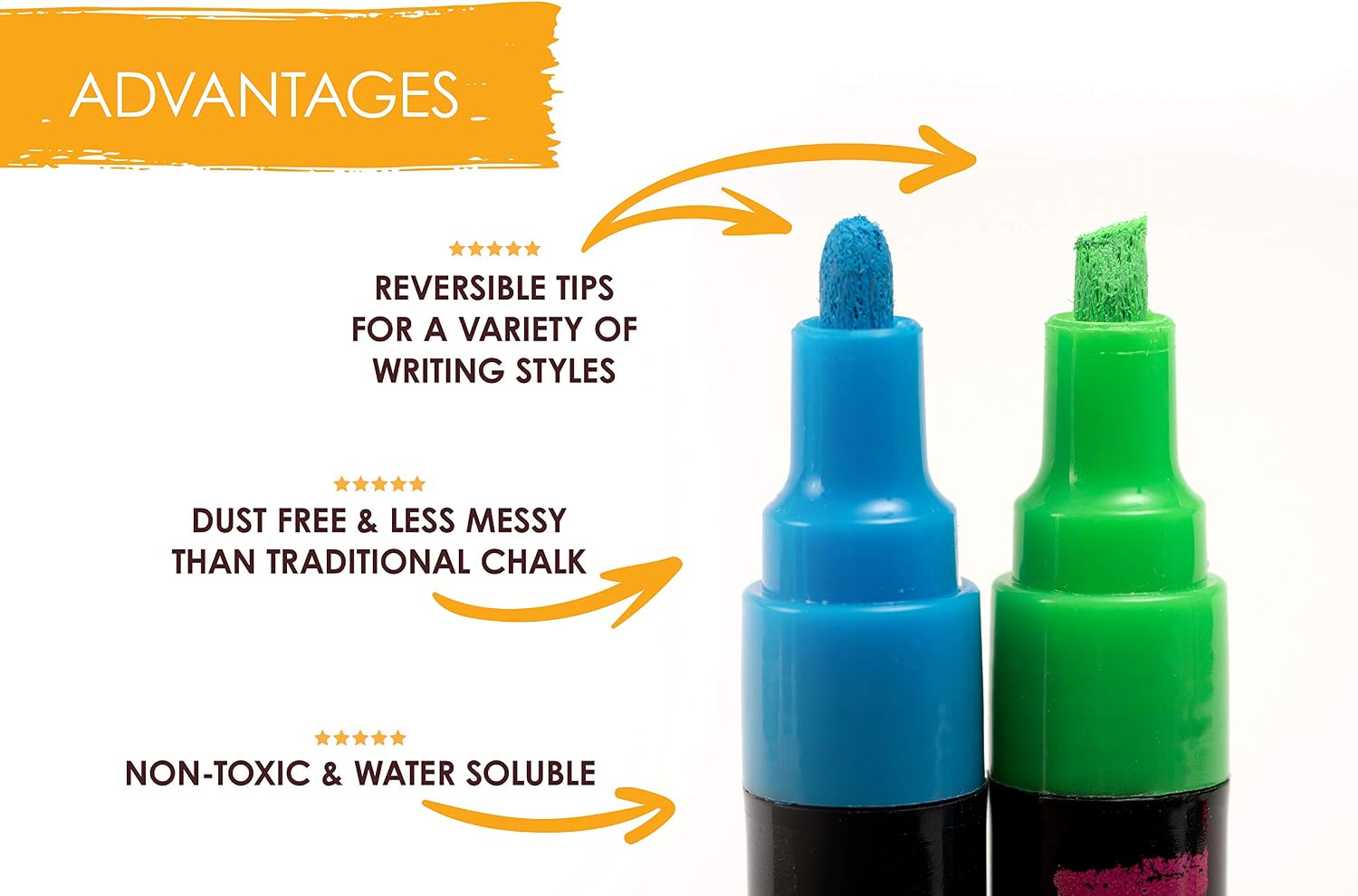
One chalk marker set that appears frequently in the general category conversation — sold under the Bandle B. brand name — carries a repeated complaint worth flagging before you buy: the reversible tip (bullet on one end, chisel on the other) requires the user to physically pull the tip out with their fingers to flip it, transferring wet ink to skin in the process. Multiple reviewers note this independently. It’s not a dealbreaker, but it’s a design quirk you should know going in, especially if you’re doing detailed car window lettering where ink on your hands means ink on your design.
Bold
$7.99
In stock on Amazon
Check price on AmazonClassroom Windows and Commercial Glass: Where “Non-Porous Surface” Gets Complicated
Teachers discovered chalk markers for glass early, and the use case makes intuitive sense: glass is smooth, non-porous, and wet-erase markers lift cleanly without leaving the dusty residue that traditional chalk creates near HVAC systems. Apartment Therapy’s chalkboard styling guide notes the same advantage for home use, observing that chalk markers on glass or mirror surfaces give you the look of chalk signage without the mess and the ghost lines — except ghost lines are exactly what some buyers experience. Here’s why, and how to prevent it.
The ghosting mechanism on glass: Chalk markers deposit pigment in a thin film. On truly non-porous glass — clean, uncoated, no previous product buildup — that film wipes away completely. On glass that has residue from cleaning products, hard water mineral deposits, or fingerprint oils, the chalk pigment can etch slightly into that residue layer rather than sitting on top of it. When you wipe, the top layer comes off but a faint impression remains.
The fix is surface prep, not product switching. This Old House’s chalk surface material explainer series recommends cleaning glass with isopropyl alcohol before applying any chalk product, specifically because it removes the oil and mineral film that causes adhesion problems. Reviewers who report ghost-line-free removal almost universally mention wiping down the glass first.
By the numbers — ghost line prevention:
- Isopropyl alcohol (70% or higher) on a lint-free cloth before application: the most commonly cited prevention step across positive reviews
- Wet cloth plus gentle circular motion for removal: consistently outperforms paper towels, which can streak
- Leaving marker on glass longer than 72 hours: increases ghost risk significantly, per multiple reviewer observations across brands
For commercial settings — classroom windows, restaurant partitions, event signage on glass display cases — the durability question flips. You want the design to stay through a school day or a dinner service, not dissolve in the first humid afternoon. Water-based chalk markers are the right call here; solvent-based markers would require harsher removal methods and risk damaging glass coatings or window seals.
The Spruce’s surface preparation guide for chalk markers on glass specifically warns against using alcohol-based erasers on tinted or UV-coated glass windows — worth checking before you apply anything to tinted classroom windows or vehicle rear windows with embedded defrost elements.
Bandle
$7.99
In stock on Amazon
Check price on AmazonColor Vibrancy and Photography: The Signage Variable Nobody Mentions Until the Photos Come Back
Event stylists and classroom teachers share a problem: the marker looks fine in person, but photographs blow out the color or read as muddy gray on a phone screen. This matters for graduation car windows — someone’s grandparent is going to photograph that car — event signage that ends up in social grids, and classroom displays submitted to school newsletters.
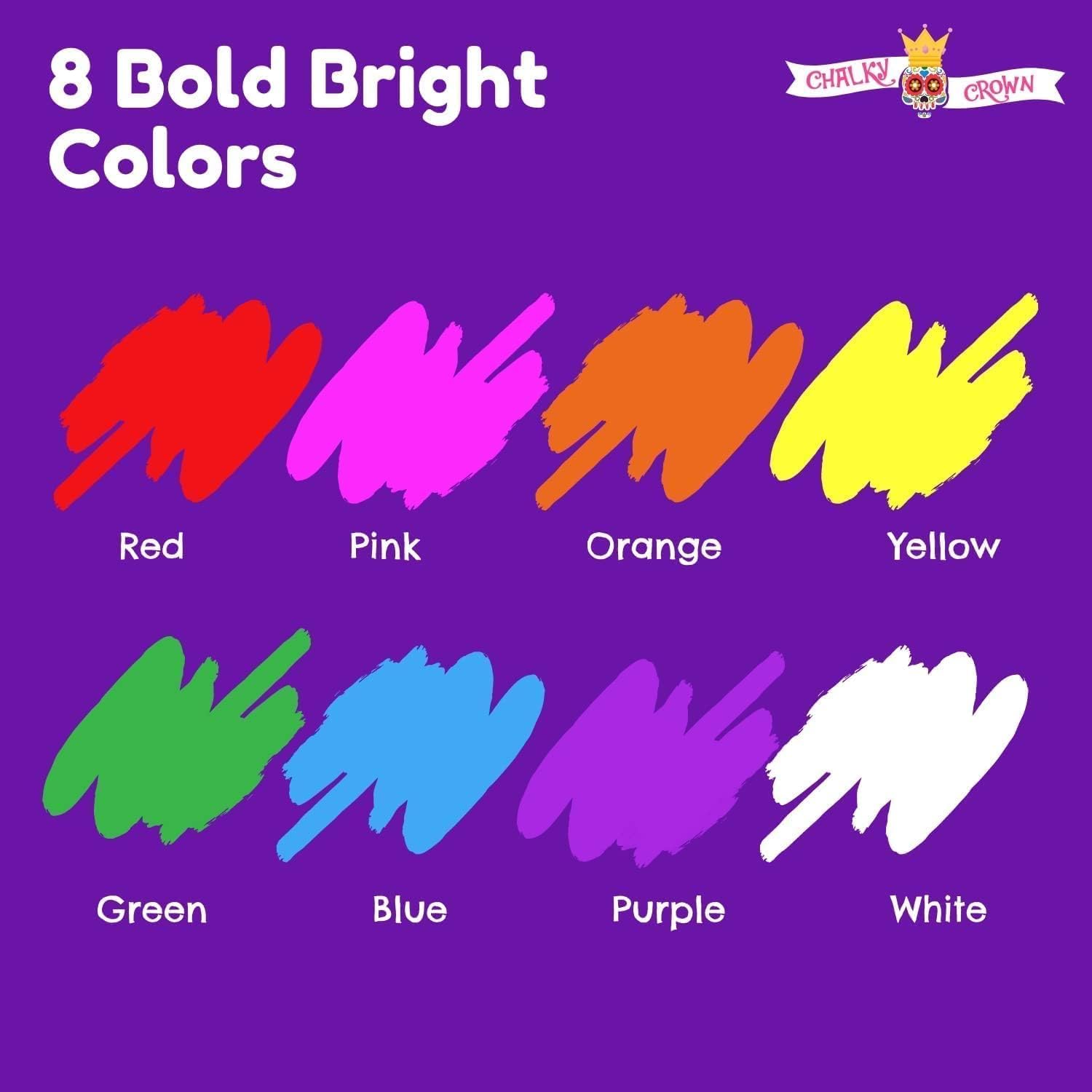
The pattern across reviewer reports is consistent: white and neon or fluorescent shades photograph dramatically better than standard mid-tone colors on dark backgrounds. White reads with maximum contrast against a car’s dark glass. Neon pink and neon yellow survive the smartphone camera’s tendency to flatten color in low-contrast images. Standard red and blue, which look vivid in person, often compress into near-identical dark tones in photos taken without direct lighting.
If your use case has a photography component — and most event and car window applications do — prioritize sets that include at least one white and two neon options. Bold Chalk Markers consistently receive mention for white opacity, with reviewers noting the white covers cleanly in a single pass on dark glass rather than requiring multiple layers.
Window
$22.99
In stock on Amazon
Check price on AmazonFrequently Asked Questions
Can liquid chalk markers be used as temporary hair color and do they wash out easily? Based on reviewer-reported discoveries, yes — the water-based formula sits on the hair surface without bonding chemically and rinses out with plain water. One buyer who used Bold Chalk Markers for this purpose specifically noted easier application than wax-based color products and confirmed same-night washout. This is an off-label use; no brand markets chalk markers for hair, and results on bleached or chemically processed hair have not been documented in the review record.
Do chalk markers on car windows survive rain or do they need to be reapplied after getting wet? Reviewers confirm that rain alone does not remove chalk marker designs from car glass — the water-based formula needs friction to lift, not just moisture. Multiple buyers report designs surviving rain showers without significant fading. An automatic car wash, however, does remove the design, per documented reviewer experience.
How do you flip the reversible bullet-to-chisel tip on the Bandle B. markers without getting ink on your fingers? Carefully, with a paper towel ready. The reversible tip requires physically gripping and pulling the tip out by hand, which transfers wet pigment to skin. Reviewers recommend gripping at the very base of the tip with a folded paper towel or wearing a disposable glove for the flip. It is a genuine design limitation, not user error.
What is the best way to erase chalk markers from glass without leaving ghost lines? Clean the glass with isopropyl alcohol before applying the marker to prevent residue adhesion, and remove with a damp cloth using circular motion rather than straight wipes. Avoid letting the marker sit on glass longer than 72 hours if ghost-line-free removal matters to you.
Will chalk marker car window art withstand an automatic car wash? No — reviewers document clean removal after a single standard car wash cycle. This is a feature if you want easy cleanup; plan around it if you need the design to last through a wash.
Which chalk marker colors show up most vibrantly in photographs for event signage? White and neon or fluorescent shades consistently outperform standard mid-tones in reviewer-shared event photos. Standard red and blue compress to near-identical dark values without direct lighting. If the design will be photographed, prioritize sets with white and at least two neon options.