September 23, 2026 • Maren Calloway • 11 min reading time • Prices verified June 6, 2026
Chalk Paint Brush Shedding, Bristle Loss, and the Hidden Cost of Cheap Sets
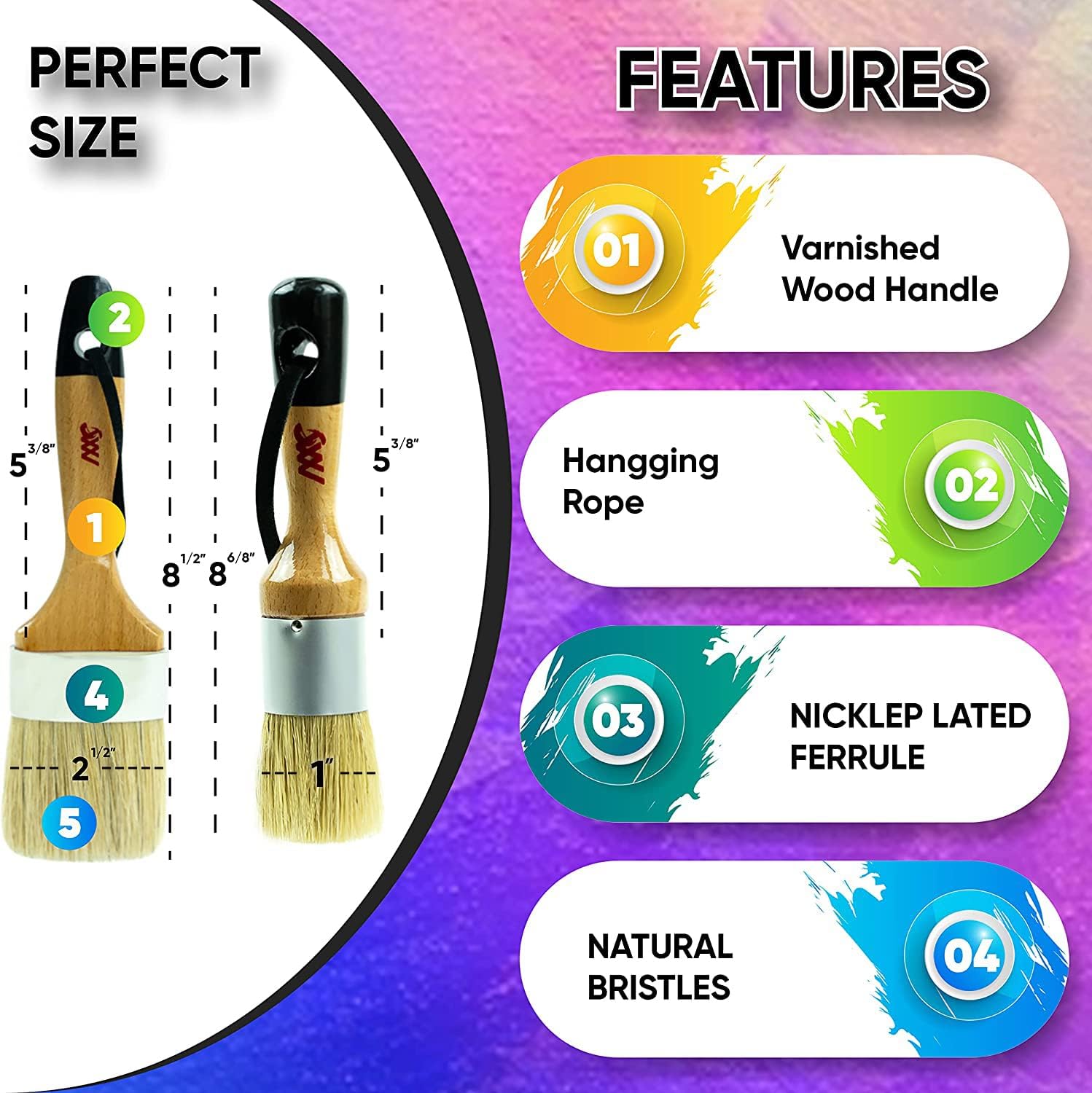
If you’ve ever dragged a brush through a freshly opened can of chalk paint — chalk paint is a thick, matte-finish paint formulated to stick to furniture and surfaces with minimal prep work — and watched a stray bristle curl up into your wet coat, you’re in good company. Bristle shedding, where individual hairs detach from the brush ferrule (the metal band that clamps bristles to the handle) and embed themselves in wet paint, is one of the most Googled frustrations in the DIY furniture world. It’s annoying, it interrupts your rhythm, and on a dark-stained dresser, a white bristle reads like a mistake. But here’s the thing most reviews eventually say: it usually isn’t a reason to throw the brush away. Understanding why it happens — and which brushes shed less, or stop shedding sooner — is what this guide is actually about. By the end, you’ll have a clear decision rule for whether a $10 set or a $30 single brush belongs in your kit.
| EDITOR'S PICKFinishing Wax Furniture Wood Fi… | Mid-tierChalk Paint Brushes Set | Budget pickMister Rui Chalk Wax Paint Brush | |
|---|---|---|---|
| Set size | 1 brush | 2 brushes | 3 brushes |
| Size | — | 2.5 in | Small |
| Bristle | — | Natural | Natural |
| Wax included | ✓ | ✗ | ✗ |
| Shedding claim | — | ✓ | ✓ |
| Best for | Waxing | Waxing | Stenciling |
| Price | $17.99 | $14.97 | $9.97 |
| See on Amazon → | See on Amazon → | See on Amazon → |
Why Bristles Shed, and When It’s Actually Normal
Bristle shedding happens for two distinct reasons, and conflating them leads to bad buying decisions.
Reason one: Manufacturing loose ends. Budget natural-bristle and synthetic brushes often ship with unbonded or weakly bonded bristles that were never fully secured during crimping. These shed on first use and then — this is the key finding — mostly stop. Reviewers across aggregated listings for multi-piece chalk paint sets consistently describe the same arc: a few bristles in coat one, one or two in coat two, and then the brush stabilizes. The Spruce, in their technique guide “How to Use Chalk Paint on Furniture,” confirms this pattern and recommends a “pre-stroke” ritual — dragging the brush firmly across your palm or a scrap piece of cardboard 20–30 times before loading paint — to dislodge loose bristles before they reach your project.
Reason two: Structural failure. This is different and worse. If a brush keeps shedding past the first full session, or sheds in clumps rather than singles, the ferrule crimp is failing under the solvent content of the paint or cleaning solution. This is a quality-control issue, not a break-in issue, and it’s the primary failure mode that separates a genuinely cheap brush from a budget brush that’s worth keeping.
Bob Vila, in their buyers guide “Best Chalk Paint Brushes,” draws exactly this distinction and notes that natural-bristle brushes from established hardware suppliers are more likely to exhibit the first (benign) pattern, while import-grade synthetic sets with uncoated ferrules skew toward the second (structural) pattern.
The practical upshot: don’t judge a brush on coat one alone. Judge it on coat three.
The Budget Set Landscape: What Reviewers Actually Say
Multi-piece chalk paint brush sets — typically four to six brushes ranging from one-inch detail to three-inch flat — cluster in the $12–$22 range and dominate the entry point for DIY furniture converters. Across aggregated review patterns, the finding is remarkably consistent: first-use shedding is nearly universal, reviewers frame it as manageable rather than disqualifying, and the sets that earn repeat purchases are the ones where shedding stops by session two.
By the numbers:
| Price tier | Typical set size | Reported shed-stop timeline | Post-break-in rating (aggregated) |
|---|---|---|---|
| Under $15 | 4–6 brushes | 1–3 coats | 3.8–4.1 / 5 |
| $15–$25 | 4–6 brushes | 1–2 coats | 4.1–4.4 / 5 |
| $28–$40 (single brush) | 1 brush | Minimal first-use shedding | 4.5–4.8 / 5 |
Apartment Therapy, in their feature “Everything You Need to Know About Chalk Paint,” notes that the bristle density and ferrule-crimp quality differences between a $10 set and a $30 single brush become most visible not on flat tabletop surfaces but on carved or turned details, where a looser, sparser bristle bundle leaves thin coverage and visible stroke lines.
Budget Pick: Short-Handle Multi-Piece Sets
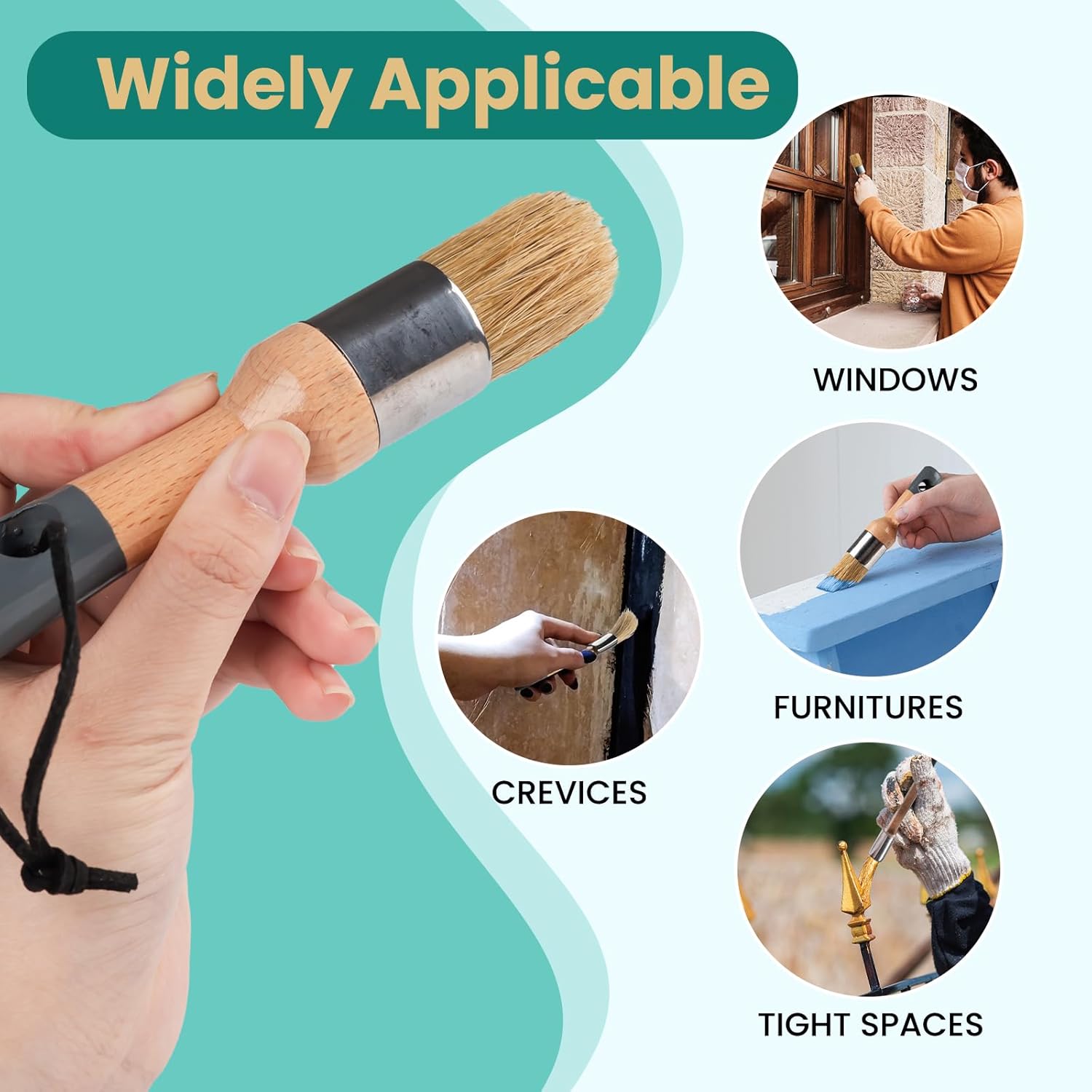
Mister
$9.97
In stock on Amazon
Check price on AmazonOne set that earns consistent callouts in the budget tier is the YiBaiBrush four-piece set, which surfaces an angle almost no other product in this segment addresses: arthritis accessibility. Reviewers specifically cite the short, wide handle profile as easier to grip and control for users with limited hand strength or joint pain. For a genuinely underserved buyer — someone who has been frustrated that brush handles are designed for maximum-grip-strength users — this is worth naming explicitly. If hand fatigue or joint pain is a factor in your buying decision, the YiBaiBrush handle geometry is a real differentiator, not just marketing copy.
Mid-Tier Pick: Better-Crimped Synthetic Sets
Chalk
$14.97
In stock on Amazon
Check price on AmazonSets in the $15–$25 range typically invest in a coated ferrule and a tighter crimp, which is where the shed-stop timeline shortens from three coats to one or two. The per-brush cost remains low enough to dedicate individual brushes to specific tasks — a narrow brush for carved legs, a wide flat brush for drawer fronts — without regretting the investment if one brush doesn’t survive a cleaning mishap.
Premium Pick: Single-Brush Investment for Statement Pieces
Finishing
$17.99
In stock on Amazon
Check price on AmazonAt the $28–$40 single-brush tier, bristle density, ferrule quality, and handle ergonomics all improve in ways that matter most on a single statement piece — a heirloom dresser, a designer chalkboard-top side table — where a stray bristle in a show-surface coat is genuinely costly to fix. Good Housekeeping, in their product roundup “Best Chalk Paint Brushes,” notes that brushes at this tier consistently outperform budget alternatives on carved and turned surfaces, where dense bristle bundles are required for even coverage.
Wax Application and the Brush-Upgrade Problem Nobody Talks About
Here’s where the hidden cost math gets interesting. Many buyers enter the chalk paint ecosystem through a combo kit — paint, wax, and a brush bundled together. The logic is sound: one purchase, everything you need. But reviewers across multiple bundled products flag a consistent problem: the included brush is usually the weakest link in the kit.
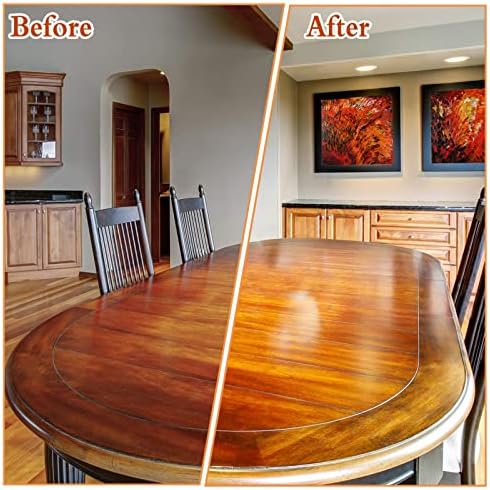
A clear wax and brush bundle in the mid-price range is a useful case study. These bundles typically earn solid overall reviews — the wax itself is often well-regarded for ease of application — but the included brush is flagged in a meaningful minority of reviews as “less soft than expected.” This matters because wax application (spreading furniture wax — a protective topcoat that seals chalk paint — in thin, even coats) benefits disproportionately from a soft, well-broken-in brush. A stiffer brush drags the wax, creates uneven coverage, and can pull up the chalk paint layer beneath if the paint hasn’t fully cured.
The practical implication: if you’re buying a wax-and-brush combo, budget $15–$20 for a separate dedicated wax brush. The cost of fixing a streaky wax coat on a furniture piece you’ve spent a weekend painting exceeds that upgrade cost in almost every scenario.
Should you use the same brush for paint and wax? The short answer is no — and the FAQ section below covers this in detail. But the structural reason matters here: wax residue in bristles is nearly impossible to fully remove during cleaning, and wax-contaminated bristles will affect paint adhesion and sheen consistency on subsequent paint coats. Keep them separate from the start.
The Jolie Finishing Wax Exception
Most finishing wax products generate muted, functional reviews. Jolie Finishing Wax is an outlier. Reviewers consistently describe the application experience as noticeably cleaner than competing products — specifically flagging the odor-free formula as a meaningful quality-of-life difference for indoor furniture projects in occupied rooms.
One comparison that circulates in the product’s review discussions is worth noting: buyers who have used premium specialty furniture waxes report that Jolie Finishing Wax produces a comparable professional-looking sheen without the petroleum solvent smell typical of paraffin-heavy alternatives. For anyone working in a bedroom, living room, or other occupied space, the low-odor formula is a practical differentiator, not just a marketing claim.
Good Housekeeping, in their chalk paint products roundup, notes that finishing wax selection has a measurable impact on final color depth: clear wax formulas with higher paraffin content tend to add a subtle warm amber cast over time, while explicitly low-paraffin clear waxes preserve the original paint color more faithfully.
Which leads directly to a question buyers ask constantly:
Does Jolie Finishing Wax darken the paint beneath it? Based on reviewer reports and Good Housekeeping’s wax analysis, the answer is: minimally, and less than most competing waxes. Reviewers describe the color shift as “barely perceptible” on light colors and “essentially invisible” on mid-tones. If you’re working with a very pale, chalky white and color accuracy matters, do a small test patch on the underside of a drawer first.
The $10 Set vs. $30 Single Brush Decision Rule
This is where the intermediate practitioner needs a clear frame, not more nuance.
If you’re running multiple furniture pieces with varied surface types — a mix of flat drawer fronts, carved legs, and tight interior corners — the budget multi-piece set makes economic sense even accounting for first-use shedding. You’ll dedicate specific brushes to specific tasks, the per-brush cost stays low, and the break-in period is an acceptable one-session tax.
If you’re doing a single statement piece — a designer chalkboard-top side table, a heirloom dresser, anything where a stray bristle in a show-surface coat is genuinely costly — the $30 single brush is the right call. The shedding risk drops substantially, the bristle density supports more even coverage, and the tool-quality ceiling matches the project-quality expectation.
If hand fatigue or joint pain is a factor, the YiBaiBrush set’s handle geometry earns a dedicated look before you default to a standard round-handle brush.
If you’re bundling wax into the purchase, budget separately for a dedicated wax brush regardless of which paint brush you choose.
This Old House, in their step-by-step guide “Painting Furniture with Chalk Paint,” summarizes the underlying principle cleanly: the brush is the cheapest variable in a furniture project and the one that most directly affects finish quality. The math on upgrading a single brush is almost always favorable relative to the time cost of fixing surface defects.
Frequently Asked Questions
Is bristle shedding into chalk paint normal on first use, and does it stop after the brush breaks in?
Yes, it’s near-universal with budget brush sets, and yes, it typically stops — or reduces dramatically — after the first full session. The pre-stroke technique (dragging the brush firmly across cardboard or your palm 20–30 times before loading paint) removes most loose bristles before they reach your project. If a brush is still shedding in clumps by coat three, that’s structural failure, not normal break-in. Return it.
Should you use a separate brush for wax vs. paint, or can one brush do both jobs?
Use separate brushes. Wax embeds in bristles at a molecular level and resists cleaning with water or soap. A wax-contaminated brush used for paint will affect adhesion and sheen consistency. Label your brushes on the handle with a paint marker and keep them in separate bags.
Does Jolie Finishing Wax darken the paint color beneath it?
Minimally, and less than most alternatives, per reviewer consensus and Good Housekeeping’s wax analysis. The color shift on light to mid-tone chalk paint is described as barely perceptible. Test on an inconspicuous surface — the back of a drawer, the underside of a table leaf — before committing to a full application on a show surface.
How do you clean natural-bristle chalk paint brushes between coats without damaging the bristles?
Rinse with warm (not hot) water immediately after each coat — chalk paint is water-based and releases easily before it dries. Reshape the bristles with your fingers and lay the brush flat or hang it bristle-down to dry. Never store a wet brush upright in a jar; water migrates into the ferrule, loosens the adhesive bond, and accelerates shedding. This Old House’s painting guide “Painting Furniture with Chalk Paint” consistently flags the upright-jar storage habit as the leading cause of premature bristle loss in otherwise functional brushes.
Is there a meaningful quality difference between a $10 chalk paint brush set and a $30 single brush for furniture projects?
Yes, on specific dimensions. Bristle density, ferrule crimp quality, and handle ergonomics all improve meaningfully at the $28–$35 single-brush tier. The difference is most visible on carved or turned surfaces, where a denser bristle bundle provides more even coverage, and on wax application, where softness matters more than it does with paint. For flat surfaces on a multi-piece project, a well-broken-in budget brush is genuinely adequate. For a single statement piece or any project where surface defects are expensive to fix, the $30 brush is worth it.