June 17, 2026 • Maren Calloway • 11 min reading time • Prices verified June 6, 2026
Chalk Paint vs. Chalkboard Paint: Which One Actually Turns Furniture Into a Writing Surface
Walk into any big-box craft aisle and you’ll see two paint families sitting within arm’s reach of each other: chalk-finish paint (sometimes called chalk paint) and chalkboard paint. The names sound almost identical, the cans are roughly the same size, and both produce a matte, low-sheen finish — so it’s genuinely easy to grab the wrong one. The difference matters enormously, though, because only one of them produces a surface you can actually write on and erase. Chalk-finish paint — brands like Dixie Belle and FolkArt Home Decor Chalk — is a decorative coating designed to give furniture a soft, chalky, vintage look. Chalkboard paint — Rust-Oleum’s brush-on formula, Krylon’s spray version, FolkArt’s Multi-Surface Chalkboard, and INSL-X among the most-reviewed — creates a true writing and erasing surface, the same kind you’d find on a classroom board. If you’re converting a table, a cabinet, or a door into a functional writing surface, you need chalkboard paint. If you want that flat matte finish for a dresser makeover with zero intention of writing on it, chalk-finish paint is the right call. This article is for people who want the writable surface — and need the full picture of what that actually involves.
| EDITOR'S PICK[Dixie Belle Paint Company Chalk](https://www.amazon.com/dp/B014AUUDF2?tag=greenflower20-20)… | Mid-tier[Rust-Oleum 206540 Chalkboard Br](https://www.amazon.com/dp/B0006BAEI6?tag=greenflower20-20)… | Budget pick[FolkArt Home Decor Chalk Furnit](https://www.amazon.com/dp/B00RGFYFL2?tag=greenflower20-20)… | |
|---|---|---|---|
| Paint Type | Chalk finish | Chalkboard | Chalk finish |
| Size | 16 oz | 30 oz | 16 oz |
| Finish | Matte | — | — |
| Color | Caviar (black) | Black | Rich Black |
| Price | $33.45 | $16.49 | $11.65 |
| See on Amazon → | See on Amazon → | See on Amazon → |
The Core Confusion, Mapped Out
The mix-up is so common that it surfaces consistently in aggregated reviewer data across chalkboard paint products: a meaningful share of disappointed reviews on genuine chalkboard paints come from buyers who expected the decorative soft finish of chalk-finish paint, and vice versa — buyers who picked up decorative chalk-finish products expecting a writable board come back frustrated.
Here’s the functional split in plain terms:
| Property | Chalk-Finish Paint | Chalkboard Paint |
|---|---|---|
| Primary purpose | Decorative matte coating | Functional writing/erasing surface |
| Writable? | No | Yes, after cure + seasoning |
| Erasable? | No | Yes |
| Needs wax topcoat? | Usually yes (protects finish) | Never (wax destroys write/erase) |
| Common brands | Dixie Belle, FolkArt Home Decor Chalk, Annie Sloan | Rust-Oleum, Krylon, FolkArt Multi-Surface, INSL-X |
The Spruce, in their editorial comparison of these two product categories, puts it directly: chalk-finish paint is a furniture paint that happens to feel chalky; chalkboard paint is a specialty coating engineered around graphite adhesion and erasability. They share a finish category — matte — but they are formulated for entirely different end uses.
One additional wrinkle worth naming: FolkArt makes both types. Their Home Decor Chalk line is decorative. Their Multi-Surface Chalkboard formula is writable. The brand overlap is a real source of cart errors, and it’s worth triple-checking the product name before checkout.
What Chalkboard Paint Actually Requires to Work
Buying the right product is only step one. Published manufacturer documentation and aggregated owner reviews across Rust-Oleum and Krylon products surface two recurring failure modes that explain the majority of disappointing results: not enough coats and skipping seasoning.
Coat Count and Surface Prep
Owners consistently report that 3–5 coats are needed on raw or previously finished wood to get a surface that writes and erases cleanly. The standard instructions on many cans specify 2 coats; in practice, reviewers note that 2 coats on wood leaves a surface that absorbs chalk unevenly and shows ghosting — faint residual marks left behind after erasing — after the first few uses. On smooth, non-porous surfaces like metal, glass, or laminate, fewer coats may be sufficient because the paint adheres more uniformly.
This Old House, in their editorial overview of chalkboard paint application, notes that sanding lightly between coats with 150-grit sandpaper and wiping clean before recoating significantly improves inter-coat adhesion and final surface quality. That intermediate sanding step is one of the most skipped and most consequential parts of the process.
Cure Time
The full chemical cure — the point at which the paint film has hardened enough to write on and erase without lifting — takes longer than most buyers expect. The INSL-X / Benjamin Moore Chalkboard Paint product bulletin specifies a multi-day cure window before the surface should be used; owner reviews confirm that surfaces written on too early develop permanent marks that can’t be erased cleanly. The general guidance across products is a 72-hour minimum at room temperature before seasoning, and a full 7-day cure before heavy or repeated use. Writing on the surface at 24 hours because it looks dry is the single most common way to ruin it before it ever gets used properly.
Seasoning
Seasoning is the step that confuses new buyers the most, and skipping it is the second-fastest way to create a ghost-ridden board. Seasoning means taking a piece of chalk, laying it on its side, and rubbing it across the entire surface — horizontally, then vertically — covering every inch. Then wiping the whole thing off with a soft cloth or felt eraser. What you’re doing is filling the microscopic pores in the paint film with chalk dust so that the surface reaches a stable baseline before you write your first real message.
If you write on an un-seasoned board, the first words will ghost — leaving a faint, permanent impression in those open pores that no amount of erasing removes. The Spruce’s coverage of chalkboard paint application describes seasoning as non-optional, and aggregated owner reviews bear this out: nearly every “the image won’t erase” complaint on a properly applied chalkboard paint product traces back to a skipped seasoning step.
Product Comparison: Four Formulas, Three Tiers
The chalkboard paint category is not one-size-fits-all. The right formula depends on your substrate, your application method, and how demanding your use case is. Here’s how the four most-reviewed formulas compare.
Budget-Accessible Option: Krylon Chalkboard Spray
The Krylon Products Group Chalkboard Spray Paint — documented in Krylon’s technical FAQ — earns specific praise for achieving an even, fine-textured surface on curved or complex shapes: chair backs, drawer fronts, decorative frames, and smaller accent pieces. The spray format removes brush marks entirely, which matters on surfaces where a roller or brush would leave texture.
Reviewers note that thin, even spray coats are critical. Heavy single-pass application leads to runs and a texture that feels “plasticky” rather than slate-like. Budget for 4–6 light passes rather than 2 heavy ones. This formula is best suited for smaller projects and complex geometries rather than large, flat tabletops where brush-on coverage is more efficient.
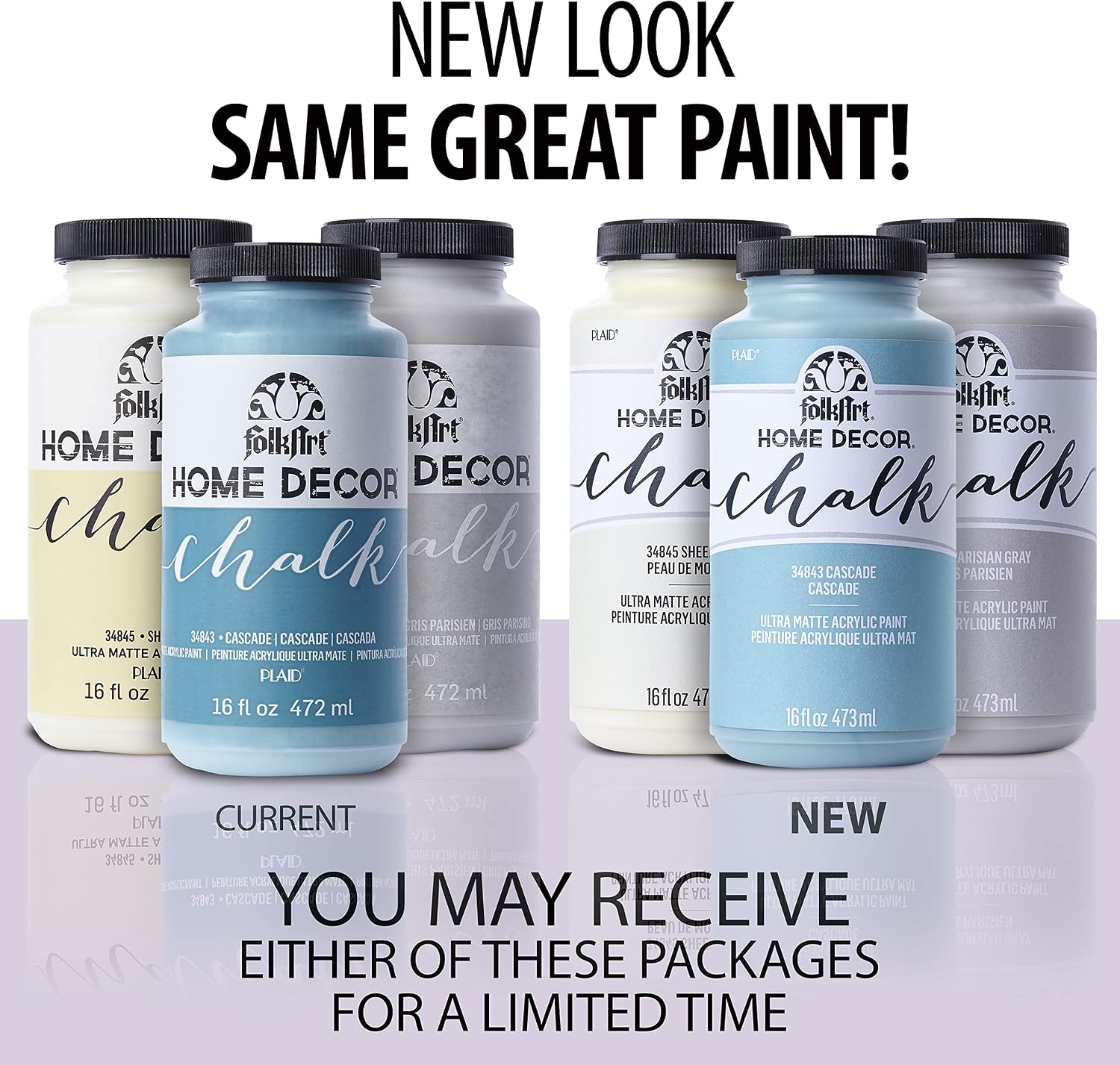
FolkArt
$11.65
In stock on Amazon
Check price on AmazonMid-Range Workhorse: Rust-Oleum and FolkArt Multi-Surface Chalkboard
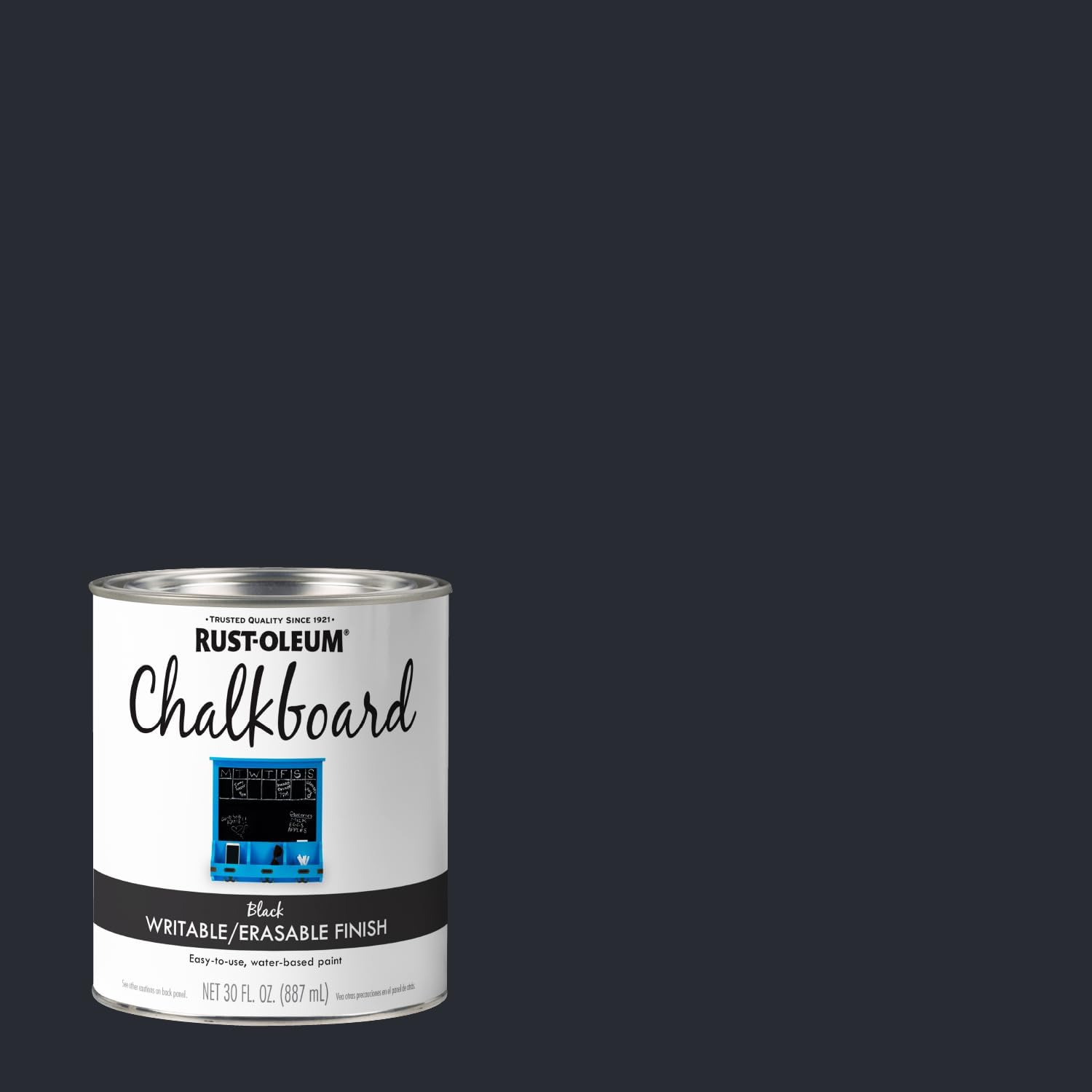
Rust-Oleum Chalkboard Paint (brush-on): The Rust-Oleum Corporation’s brush-on chalkboard paint formula is the most widely reviewed product in this category. Owners consistently praise coverage and durability on large flat surfaces — tabletops, cabinet panels, door sections. The 3–5 coat recommendation on wood holds across the vast majority of owner reviews. The formula is forgiving for beginners applying with a quality synthetic brush or short-nap roller.
FolkArt Multi-Surface Chalkboard: This formula, documented in FolkArt / Plaid Enterprises’ product line materials, receives consistent praise for producing an authentic chalkboard texture — reviewers specifically compare it favorably to a real slate board — rather than the slightly synthetic feel some other latex-based formulas produce. It’s the formula most often cited in positive DIY table conversion reviews and is available at most craft retailers, making it accessible for same-day project starts.
Both formulas land in the mid-range of the category in terms of price per ounce and represent the best overall value for standard wood furniture projects.
Rust-Oleum
$16.49
In stock on Amazon
Check price on AmazonPremium Application: INSL-X with Built-In Primer
The INSL-X / Benjamin Moore Chalkboard Paint with built-in primer earns strong marks for adhesion on challenging surfaces that other formulas struggle with: metal, glass, smooth laminate, and MDF. The integrated primer eliminates a prep step and reduces the total project timeline. One widely cited owner review in INSL-X’s aggregated feedback describes applying it to a metal surface and using it as a recurring-use calendar with no ghosting after proper cure — an unusual substrate success story that highlights this formula’s surface flexibility.
The tradeoff is availability: INSL-X is sold through paint specialty retailers and Benjamin Moore dealers rather than craft or big-box stores, which can require advance ordering. For standard wood projects, the additional cost and procurement friction aren’t justified. For non-wood substrates or demanding commercial-use applications, it’s the formula manufacturer documentation and owner reviews point to most consistently.
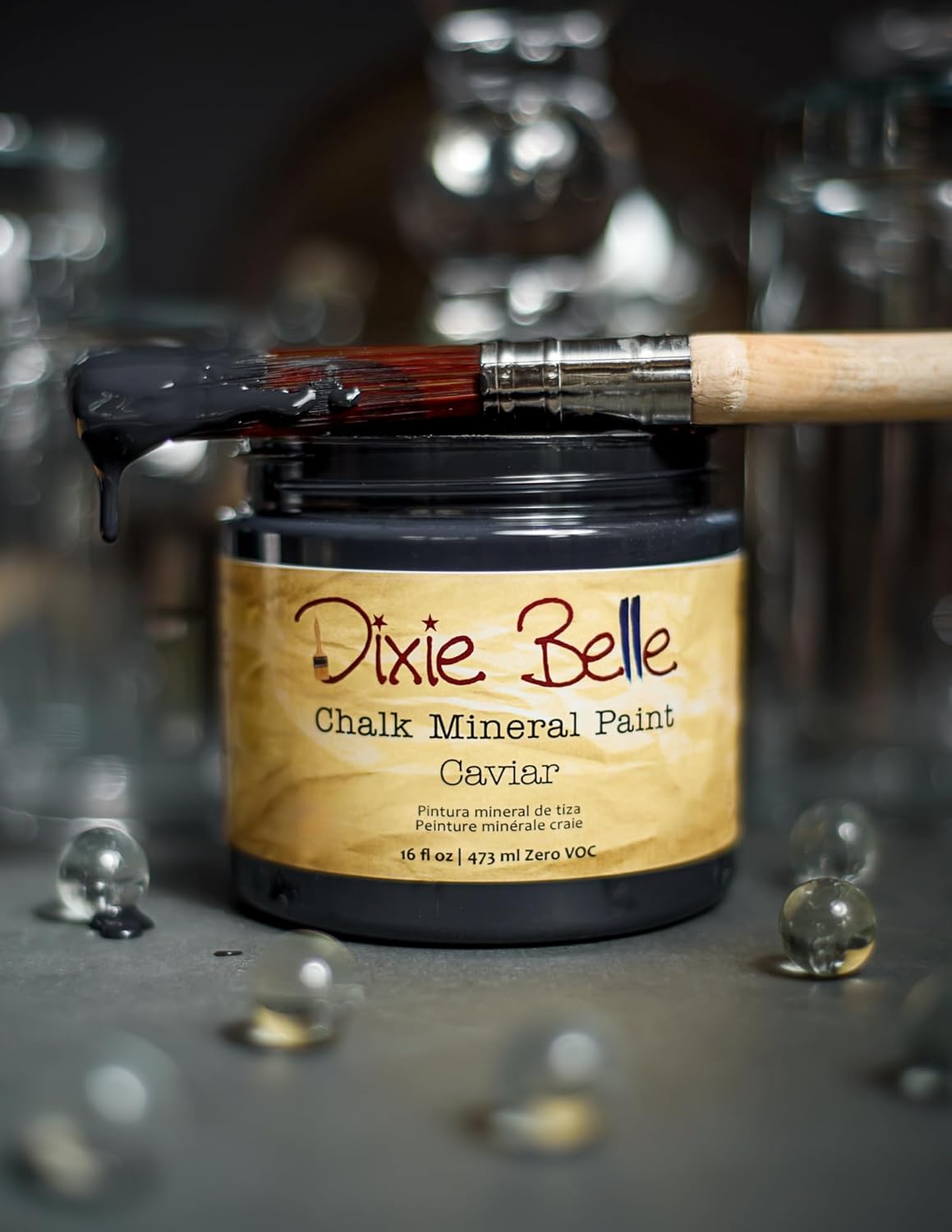
Dixie
$33.45
In stock on Amazon
Check price on AmazonThe Wax Question — and Why It’s a Hard Boundary
Chalk-finish paint furniture projects almost always end with a wax topcoat — Annie Sloan’s clear wax, a dark wax, or a comparable finishing wax — because the paint film on its own is porous and will absorb oils, moisture, and fingerprints over time. The wax seals the surface and gives chalk-finish pieces their characteristic soft, burnished feel.
If you apply any wax — clear, dark, paste, or spray — to a chalkboard paint surface, you have permanently destroyed its write/erase functionality. Wax fills the microscopic surface texture that chalk grips. The result is a surface that chalk slides across without marking, or marks inconsistently and won’t erase. There is no way to reverse this short of stripping back to bare substrate and repainting.
This is the most important reason to be absolutely certain which product you’re using before you start: the finishing process for decorative chalk-finish work actively ruins functional chalkboard work. If you want a converted piece that has some protection on non-writing areas, apply a clear matte polyurethane to the frame, legs, or surrounding surfaces only. The writing surface itself should remain unsealed.
Frequently Asked Questions
Can I use chalk-finish furniture paint as a writable chalkboard surface? No. Products like Dixie Belle and FolkArt Home Decor Chalk are engineered for a decorative matte finish, not for chalk adhesion and erasability. Chalk will not write cleanly on them, and if it marks at all, it won’t erase. You need a product specifically formulated as chalkboard paint.
How many coats of chalkboard paint do I really need? On wood, plan for 3–5 coats with light sanding between coats. Two coats — the minimum many cans list — typically produces a functional but thin surface more prone to ghosting. On glass or metal, 2–3 even coats are more commonly sufficient because adhesion is more uniform.
What is the seasoning step and can I skip it? Seasoning means rubbing the side of a chalk stick across the entire cured surface to fill the paint’s pores with chalk dust, then wiping clean before first use. You cannot skip it. An unseasoned board will permanently ghost the first text or images written on it because the chalk embeds directly into the open pores of the paint film. The step takes about five minutes and is mandatory.
How long should chalkboard paint cure before I write on it? The surface will feel dry to the touch within hours, but the paint film needs 72 hours minimum — and ideally a full 7 days — before it’s ready for use. Writing on it at 24–48 hours is the most reliable way to create permanent ghosting. Cure in a warm, ventilated space and resist the urge to test it early.
Will chalkboard paint work on metal or glass? Yes, with proper surface preparation. Metal should be clean, dry, and free of rust; a scuff-sand improves adhesion. Glass and smooth laminates benefit from a light scuff as well. The INSL-X formula with built-in primer is the most consistently cited option in owner reviews and manufacturer documentation for non-wood substrates.
Does wax ruin a chalkboard surface? Yes, permanently. Wax fills the texture that chalk needs to grip and makes the surface non-erasable. Keep wax entirely off any chalkboard-painted area. The two products are incompatible in the same zone, full stop.
The Decision Rule
If you’re converting a piece of furniture and you want a surface you can write on and erase, the decision tree is short:
- Decorative matte finish only → chalk-finish paint (Dixie Belle, FolkArt Home Decor Chalk). Finish with wax. Do not expect it to be writable.
- Functional writing/erasing surface on wood → chalkboard paint (Rust-Oleum brush-on or FolkArt Multi-Surface). Budget for 3–5 coats, a 7-day cure, and a mandatory seasoning pass. Apply zero wax to the writing surface, ever.
- Spray application or complex shapes → Krylon Chalkboard Spray. Use thin, even passes.
- Non-wood substrate (metal, glass, laminate) → INSL-X with built-in primer is the formula manufacturer documentation and owner reviews point to most consistently for demanding surfaces.
The confusion between these two product families costs people time, materials, and a full refinishing job. Getting this right at the shelf level — or before you add to cart — is the whole game.