August 10, 2026 • Maren Calloway • 11 min reading time • Prices verified June 6, 2026
Dustless and Liquid Chalk for Kids: Which Format Actually Stays Off Their Hands
If you’ve ever watched a five-year-old finish a chalk drawing and then wipe both palms across their jeans, you already understand the problem this article is solving. “Chalk dust” is the powdery residue that regular chalk leaves on hands, clothes, and surfaces when the pigment rubs off during use. “Dustless chalk” is a reformulated version engineered to reduce that transfer — but it’s a spectrum, not a binary. “Liquid chalk markers” (sometimes called chalk pens or wet-erase markers) skip the stick format entirely: they work like a felt-tip pen but erase from non-porous chalk surfaces without the mess of dry chalk. Each format promises cleaner hands, but they fail in completely different ways. This guide breaks down the real trade-offs — by age, surface type, and use case — so you can make the right call before you’re scrubbing marker off a playroom rug.
| EDITOR'S PICKJOYIN 160 PCS Sidewalk Chalks S… | Mid-tierBold Chalk Markers - Dry Erase… | Budget pickDustless Chalk for Kids | |
|---|---|---|---|
| Format | Jumbo sticks | Liquid markers | Chalk pens |
| Pieces count | 160 | 8 | 6 |
| Colors | 16 colors | — | Colored |
| Washable | ✓ | — | ✓ |
| Non-toxic | ✓ | — | ✓ |
| Tip style | — | Reversible | — |
| Price | $29.99 | $7.99 | $6.99 |
| See on Amazon → | See on Amazon → | See on Amazon → |
The Three Formats, Plainly Compared
Let’s establish a shared baseline before going deeper, because the marketing language around these products is genuinely confusing.
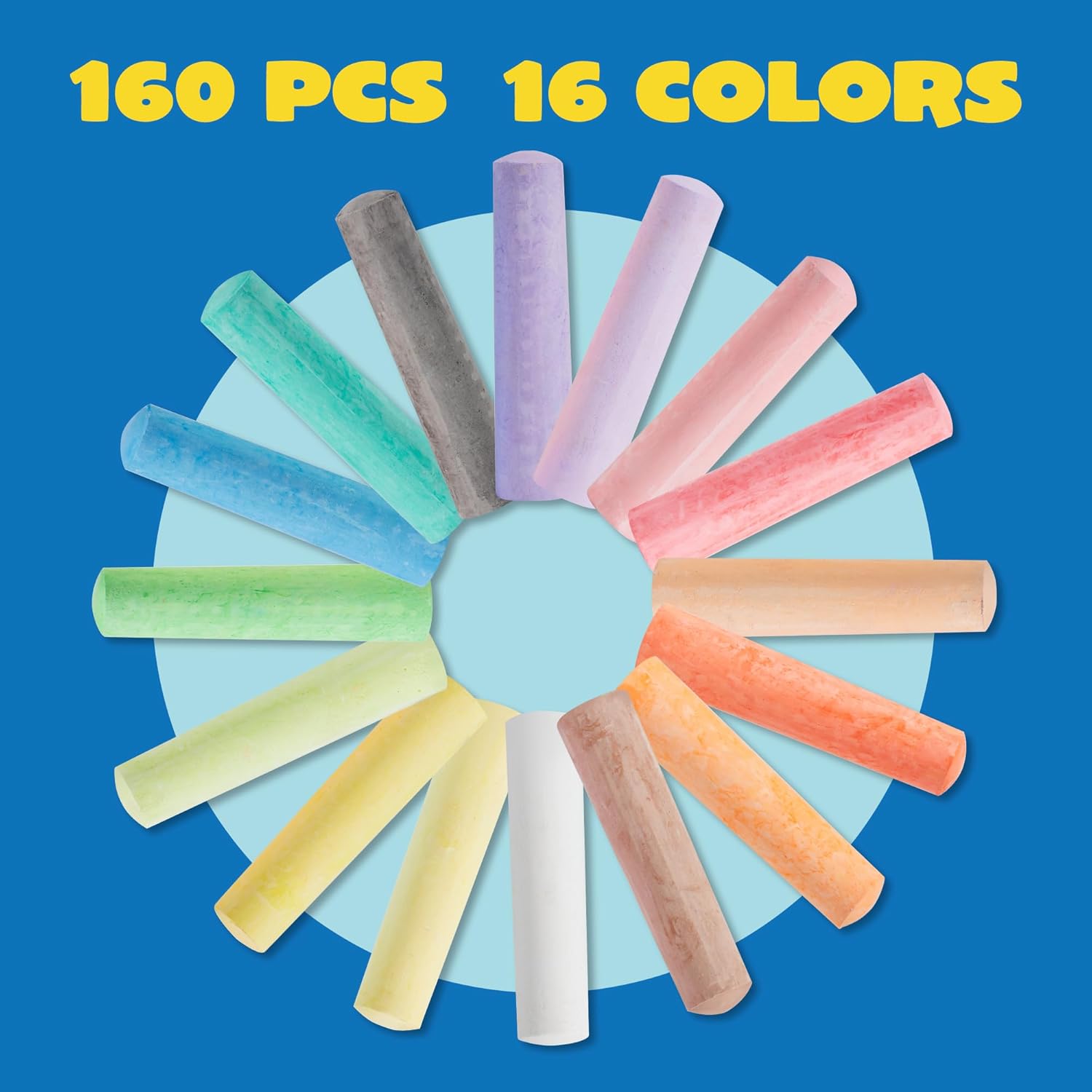
Standard jumbo chalk is the thick-barrel, calcium carbonate stick most people picture. “Jumbo” refers to the diameter — typically 16mm or wider — which makes it easier for small hands to grip. It is always dusty to some degree, but the jumbo form factor is specifically engineered to reduce breakage, which is the leading complaint parents have with thin chalk in toddler hands.
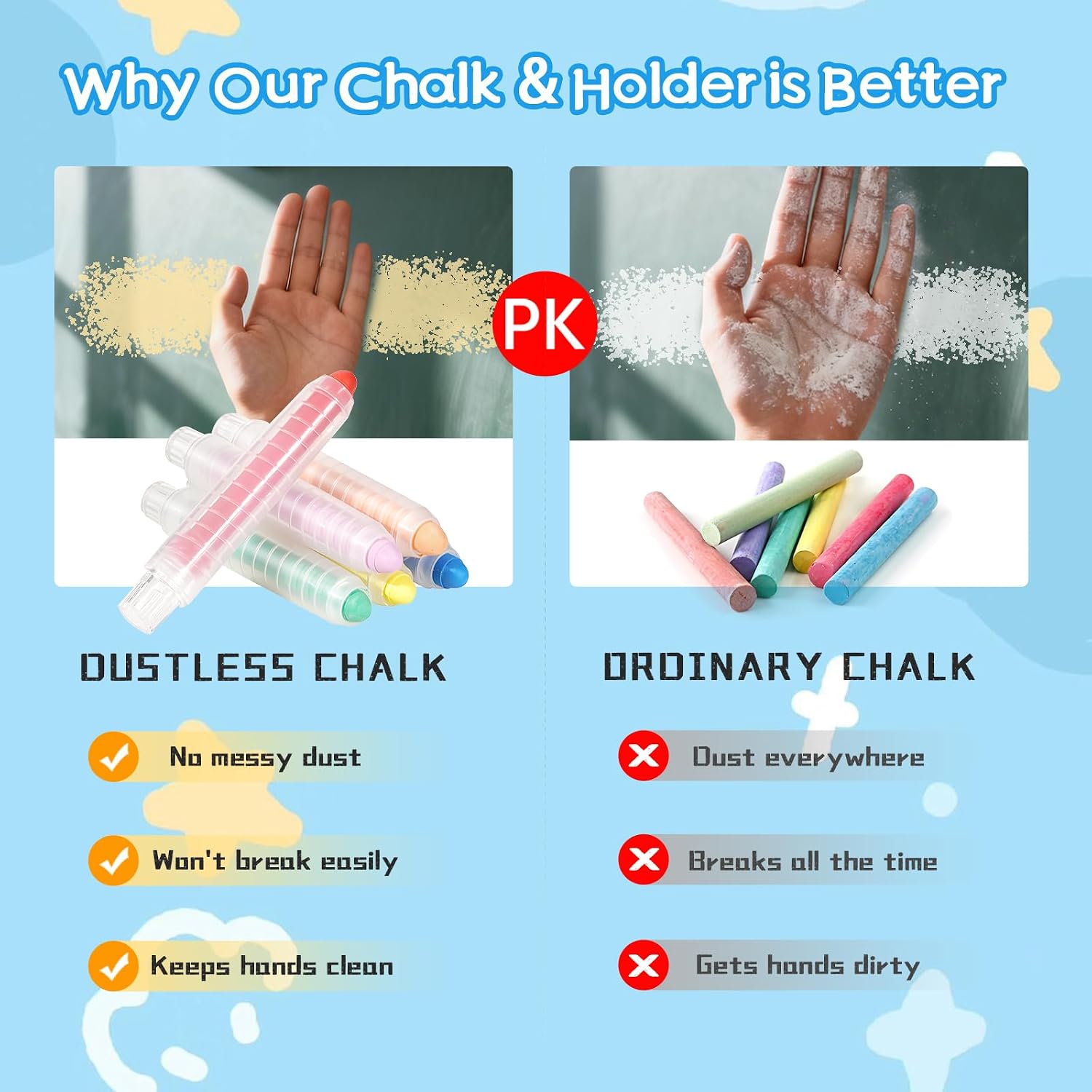
Dustless chalk (also sold as “anti-dust” chalk) uses a binding agent in the formulation that causes dust particles to fall downward rather than becoming airborne. In pen-style holders — a plastic barrel filled with compressed chalk compound — the child never contacts the chalk body at all, which is the most meaningful cleanliness upgrade the format offers. The Spruce, in their overview “What to Know Before Buying Chalk Markers” (2025), notes that the distinction between stick-contact and pen-grip formats matters most for children with sensitivities to chalk texture.
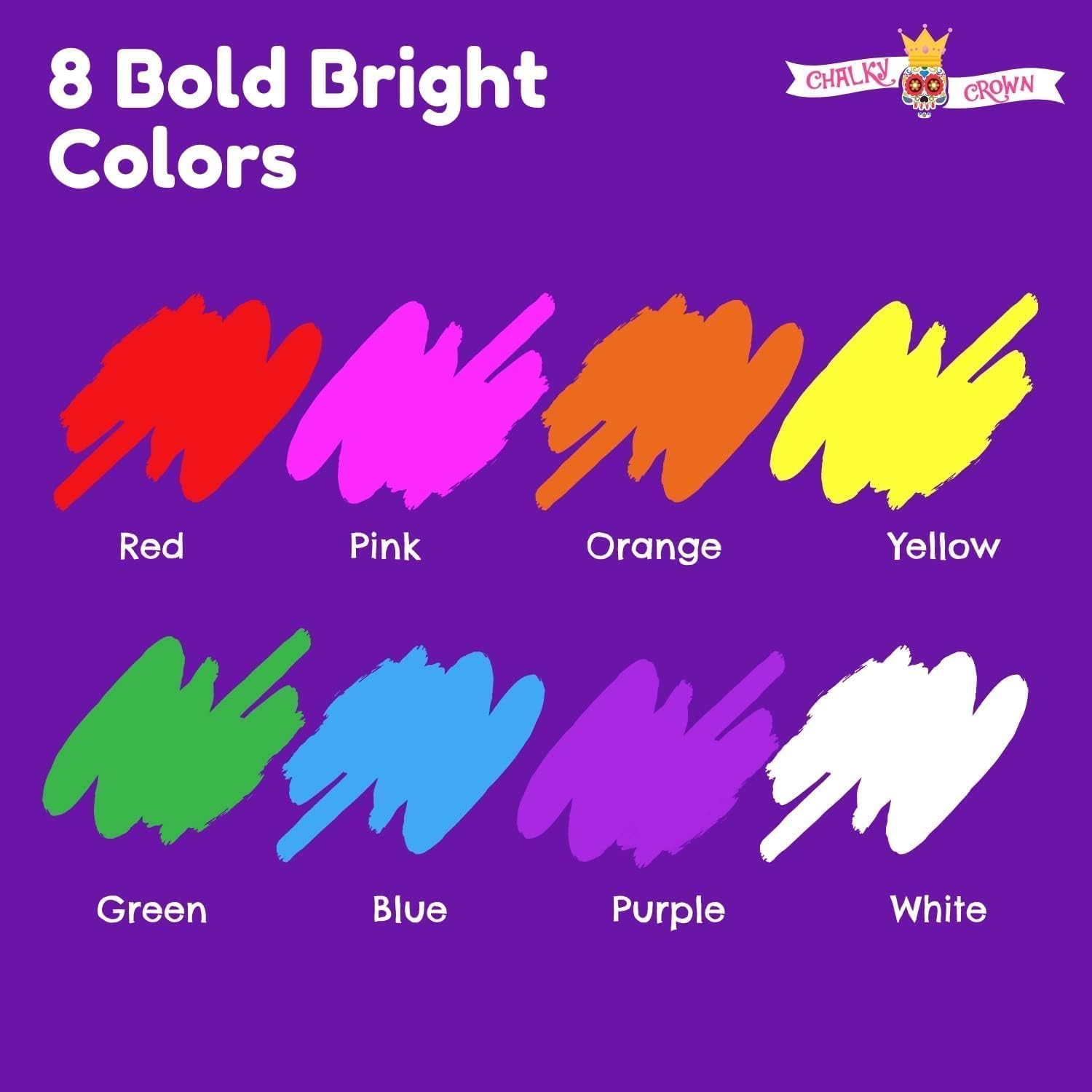
Liquid chalk markers are wet-erase markers containing chalk-based pigment suspended in a water-soluble liquid. They write like a marker, produce bold opaque lines, and erase cleanly — but only from sealed, non-porous surfaces. This is the critical hidden variable that a significant number of buyers discover too late. Apartment Therapy’s 2024 article “How to Season a Chalkboard So Markers Don’t Ghost” explicitly flags that unsealed or improperly seasoned chalkboard surfaces — whether slate or chalk-painted MDF — will trap liquid chalk pigment in micro-abrasions, causing what’s called “ghosting”: a faint permanent impression that doesn’t fully erase.
Side-by-Side: Format Comparison by Age and Use Case
| Format | Typical age range | Dust on hands | Broad coverage | Works on driveways | Clean erase (sealed surface) |
|---|---|---|---|---|---|
| Jumbo stick chalk | 2–8 | High | Yes | Yes | N/A |
| Dustless chalk pen | 4–10 | Low | Limited | No | N/A |
| Liquid chalk marker | 6+ (supervised) | None | Limited | No | Yes |
Performance characterizations are synthesized from aggregated reviewer reports and manufacturer spec language, not independent lab testing.
Jumbo Stick Chalk: Best for Toddlers and Outdoor Surfaces
Dustless
$6.99
In stock on Amazon
Check price on AmazonThe jumbo stick chalk format generates a consistent pattern across buyer reviews: parents and educators return to two things — color payoff and structural durability. Wide-barrel sticks hold up better in small hands than thin chalk, which is a specific engineering challenge: more surface area means more leverage when a child presses at an angle. Several reviewers specifically call out the lack of individual plastic wrapping as a practical convenience — with 80 or more pieces in a set, unwrapping each stick before a playdate is a real friction point.
The trade-off is non-negotiable: jumbo chalk is dusty. Good Housekeeping, in their 2025 roundup “Best Chalk for Kids: Sidewalk, Dustless, and More,” notes that even products marketed as “dustless” in stick form should be understood as “reduced-dust” rather than genuinely dust-free. Pigment transfer to skin during use is inherent to the stick format regardless of how the chalk compound is blended. If your child has eczema or tactile sensitivities, or if you’re using chalk at an indoor chalkboard table where dust accumulates on the surface and edges, this matters practically.
For outdoor driveway use, jumbo chalk is the only format that makes practical sense. The granularity that makes it “dusty” indoors is exactly what allows it to deposit pigment on rough concrete without clogging. Liquid chalk markers and dustless chalk pens are not rated for outdoor porous surfaces and will clog or fail on masonry.
The decision rule: If your use case is outdoor drawing, sensory play, or kids under four, jumbo chalk wins by default. The dust is real; the durability and coverage are also real. Budget for a wet wipe station nearby.
Dustless
$6.99
In stock on Amazon
Check price on AmazonDustless Chalk Pens: Best for Detail Work Ages Four to Ten
Bold
$7.99
In stock on Amazon
Check price on AmazonDustless chalk pens occupy a genuinely useful niche that doesn’t get enough attention in parent buying guides. The pen-style grip eliminates hand-to-chalk contact entirely — a five-year-old holds a plastic barrel, not a chalk stick. Multiple reviewers of chalk pen formats identify this as the single biggest quality-of-life upgrade over stick chalk for kids in the four-to-eight range: hands stay clean without any behavioral change on the child’s part, because the format physically prevents contact.
The format’s limitation is coverage area. The tip geometry on chalk pens is designed for writing and detail work, not for coloring in large areas. Wirecutter, in their ongoing coverage “Best Art Supplies for Kids” published through The New York Times, notes this as a structural limitation of the pen format across product categories — it is not brand-specific. If your child’s primary activity is filling in big shapes or working across a wide chalkboard table surface, chalk pens will be frustratingly slow and will wear out tips faster than expected.
The other honest caveat: dustless chalk pens do not work on outdoor driveways or rough sidewalk surfaces. The tip clogs, the barrel can crack in direct sun, and the chalk compound is not formulated for exterior masonry. This is a hard constraint, not a mild caution.
For parents weighing chalk pens as a permanent upgrade over stick chalk, the per-piece economics shift. Chalk pens are typically sold in sets of 12 to 20 and run out with moderate-intensity use in a few weeks. Owners across multiple product reviews mention factoring refill costs into their buying decision. If your child draws daily on a large surface, jumbo chalk sticks remain the better cost-per-hour value.
The decision rule: Dustless chalk pens are the right call for kids aged four to ten who primarily do detail work — lettering, signs, small illustrations — and who use an indoor chalkboard table with good cleanup access. For parents who run into the “dusty jeans” problem constantly, the grip format alone justifies the trade-off.
Bold
$7.99
In stock on Amazon
Check price on AmazonLiquid Chalk Markers: Best for Sealed Surfaces and School-Age Kids
JOYIN
$29.99
In stock on Amazon
Check price on AmazonLiquid chalk markers generate some of the most enthusiastic reviews in this category — and some of the most frustrated ones. The pattern across thousands of buyer reviews is consistent enough to function as a reliable signal: vibrant colors, clean wipe-off erasure from sealed surfaces, no chalk residue on hands or clothing. Reviewers repeatedly praise the markers for signs, party labels, photo prop boards, and last-day-of-school backdrops — a multi-use case that shows up across product categories and suggests meaningful secondary use beyond daily drawing play.
The frustrated reviews almost always share one variable: the chalkboard surface was not prepared correctly. Apartment Therapy’s 2024 article “How to Season a Chalkboard So Markers Don’t Ghost” explains the process: a new chalkboard surface — whether slate, chalk-painted MDF, or any chalk-top material — must be “seasoned” before first use by rubbing the flat side of a chalk stick across the entire surface and then erasing it. This fills micro-pores and creates a protective base layer. Skipping this step leaves the surface vulnerable to pigment absorption. Liquid chalk marker pigment, being water-suspended, penetrates unsealed micro-abrasions and dries into them. Ghosting — the faint impression that persists after erasure — is the result. The surface, not the marker, is almost always the culprit.
The age consideration for this format is also distinct. Liquid chalk markers require deliberate tip pressure management: pressing too hard on a fresh marker floods the tip and bleeds pigment past the intended line. The Spruce’s 2025 overview “What to Know Before Buying Chalk Markers” notes this as a technique challenge that younger children reliably struggle with. Reviewers echo this: the format works well for children over six or seven who have developed fine motor control, and produces blotchy, frustrating results below that age. Most brands carry AP non-toxic certification, so toxicity is not the concern — the format simply does not perform well in hands that cannot manage consistent, moderate pressure.
The decision rule: Liquid chalk markers are the right choice for a properly seasoned, sealed indoor chalkboard table surface and for children with enough motor control to manage consistent tip pressure — typically six and up. If your chalkboard surface is new, unseasoned, or a rough outdoor driveway, markers will ghost and disappoint. The multi-use case (signs, photo props, party labels) makes them worth having even for families who rely on stick chalk for daily drawing.
JOYIN
$29.99
In stock on Amazon
Check price on AmazonMulti-Use Scenarios: The Overlooked Buying Driver
One of the more consistent signals across all three product categories is how often buyers mention using chalk products for purposes beyond kids’ daily drawing. Parents across jumbo chalk, dustless pen, and liquid marker review threads mention last-day-of-school signs, birthday party labels, wedding signage, and seasonal photo backdrop boards as primary or co-equal use cases.
This matters for buying decisions in two ways. First, adults in the household are likely to share the product — and adult use patterns (deliberate lettering, held longer, used on vertical surfaces) differ from child use patterns. Liquid chalk markers perform better for adult-style lettering and sign work; jumbo chalk is more versatile for child-led play across surfaces. Second, if you’re sourcing chalk products partly for occasional special-occasion use, investing in a higher-quality liquid chalk marker set makes more sense than buying the cheapest option. Color consistency and tip longevity matter more when the output is a photo prop that lives in an image permanently.
Good Housekeeping’s 2025 chalk roundup recommends keeping at least two format types in the house — one stick-format set for outdoor and sensory play, and one marker or pen-format set for indoor chalkboard table work — precisely because the use cases don’t overlap cleanly enough for a single format to serve all of them.
Frequently Asked Questions
Will liquid chalk markers wipe cleanly off a kids’ chalkboard table without ghosting? Owners report clean erasure from properly sealed, non-porous chalkboard surfaces. The key variable is surface preparation: an unsealed or improperly seasoned chalk surface will ghost regardless of marker brand. Apartment Therapy’s 2024 article “How to Season a Chalkboard So Markers Don’t Ghost” details the seasoning process, which should be completed before first use on any new chalkboard table.
Are jumbo chalk sets actually durable enough not to crumble in small hands? Owners of wide-format jumbo chalk sets consistently report better structural durability than standard thin chalk sticks. Crumbling is significantly less common in the 16mm-and-wider category. That said, no chalk stick is press-proof; reviewers note that kids who push straight down at a 90-degree angle will still break pieces occasionally.
Do dustless chalk pens work on outdoor driveways or only indoor boards? Dustless chalk pens are designed for smooth, sealed, non-porous indoor surfaces. They do not work on outdoor concrete or masonry — the tip clogs on rough surfaces, and the chalk compound is not rated for exterior use. For driveway drawing, standard jumbo stick chalk is the correct format.
At what age can kids switch from jumbo chalk to marker-style formats? Reviewers and parenting guides generally suggest dustless chalk pens are appropriate from around age four, when grip strength and motor control allow pen-style holding. Liquid chalk markers are better suited from age six or seven, when consistent tip pressure is more achievable. Wirecutter’s “Best Art Supplies for Kids” coverage through The New York Times suggests erring toward the older end of any age range when markers involve pressurized tips.
Can liquid chalk markers be used safely by toddlers? Most liquid chalk markers carry AP non-toxic certification, meaning the pigment formulation is not considered a safety hazard. However, the format is poorly suited to toddler use on practical grounds: variable tip pressure leads to blotchy results and accelerated tip wear. The format genuinely performs better in hands that can manage consistent, moderate pressure — typically school-age children and up. For toddlers, jumbo stick chalk remains the appropriate starting point.