September 27, 2026 • Maren Calloway • 10 min reading time • Prices verified June 6, 2026
Kids' Activity Tables With Chalkboard Surfaces: A Montessori-to-Playroom Buyer's Guide by Age
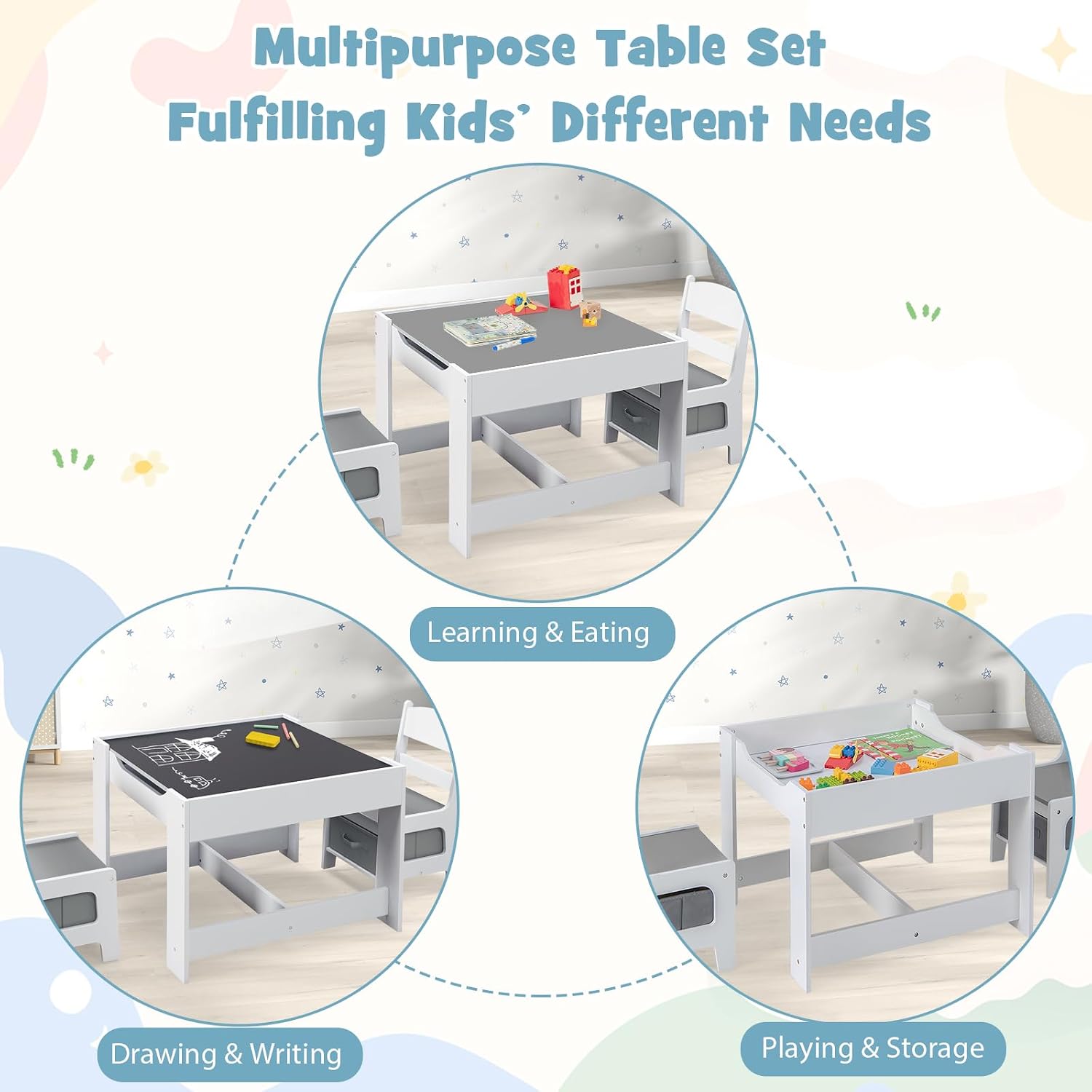
A chalkboard activity table is exactly what it sounds like: a child-sized table where the surface — or a significant portion of it — is finished so kids can write and draw on it with chalk, then wipe it clean. Most are made from MDF (medium-density fiberboard, a smooth engineered wood) painted with a chalk-receptive coating, though a few use real slate inserts. They range from simple low-profile platforms designed for babies just leaving the high chair all the way up to multi-function art stations with flip-top storage and built-in easels for kids approaching middle school. If you’re standing at a decision point right now — a toddler who just started scribbling, a kindergartner who needs a dedicated workspace, or a classroom that needs something durable enough to survive the year — this guide maps the product landscape to age and use case, flags the durability details owners wish they’d known upfront, and gives you a clear decision rule at every fork.
How to Read the Age-Stage Map
The kids’ chalkboard table market splits cleanly into three developmental tiers, and buying the wrong one isn’t just a fit problem — it’s a safety issue. A table sized for a three-year-old puts a toddler’s face at dangerous edge height. A table sized for a toddler becomes a source of frustration the moment a six-year-old can’t sit at it comfortably.
Here’s how the tiers break down by age, approximate table height, and surface type:
| Stage | Age Range | Typical Table Height | Surface Format |
|---|---|---|---|
| Weaning / early toddler | 6 mo – 2 yr | 8–12 in | Flat slab, slate or painted MDF |
| Active toddler / preschool | 2–5 yr | 18–22 in | Flat or flip-top, painted MDF |
| School-age / multi-function | 5–10 yr | 22–26 in | Flip-top or easel with chalk panel |
One calibration detail that product pages almost never print: the flip-top storage lid common on preschool-tier tables is not universally manageable by a two-year-old. Reviewers on multi-function 3-in-1 tables in this category specifically flag that the flip-top can run heavy for very young children, while the same reviewers confirm that a three-year-old handles it without help. If your child is on the young end of a table’s stated range, weight-test the lid before assuming independence.
Stage One: The Montessori Weaning Table (6 Months to ~24 Months)
The term “weaning table” comes from Montessori pedagogy — specifically, Maria Montessori’s principle that children should have a child-scaled eating and activity surface from the moment they begin transitioning off the high chair. In practice, a weaning table is a very low platform (often 8–10 inches tall) paired with a matching low stool, designed so a young toddler can sit and stand independently without adult help.
Apartment Therapy’s 2024 overview of Montessori toddler furniture — “Montessori Furniture for Toddlers: What to Buy and Skip” — notes that the weaning table’s value is as much about autonomy scaffolding as it is about the surface itself. The child’s ability to self-direct toward and away from the table without assistance is the developmental point. A chalkboard surface on a weaning table extends that independence: no scissors, no paint mess, just chalk and a cloth.
Montessori Weaning Table
The chalkboard Montessori weaning table in this guide sits at the youngest end of the product cluster. Reviewers confirm it functions well as a high-chair transition piece and that the chalkboard surface is accessible enough for a child who is just developing the pincer grip needed to hold chalk.
Height
$59.02
In stock on Amazon
Check price on AmazonWhat to watch: at this age, chalk goes in the mouth. Check that any surface coating is non-toxic and that the product lists compliance with ASTM F963-23 — the Standard Consumer Safety Specification for Toy Safety published by ASTM International — which is the baseline safety benchmark for items likely to be mouthed or chewed.
If X, then Y: If your child is under two and you’re primarily targeting the Montessori transition from high chair, the weaning table format is the right call. If your budget is fixed and you want the table to last past age three, size up to the active-toddler tier instead — you’ll get more calendar months of use.
Stage Two: Active Toddler and Preschool Tables (Ages 2–5)
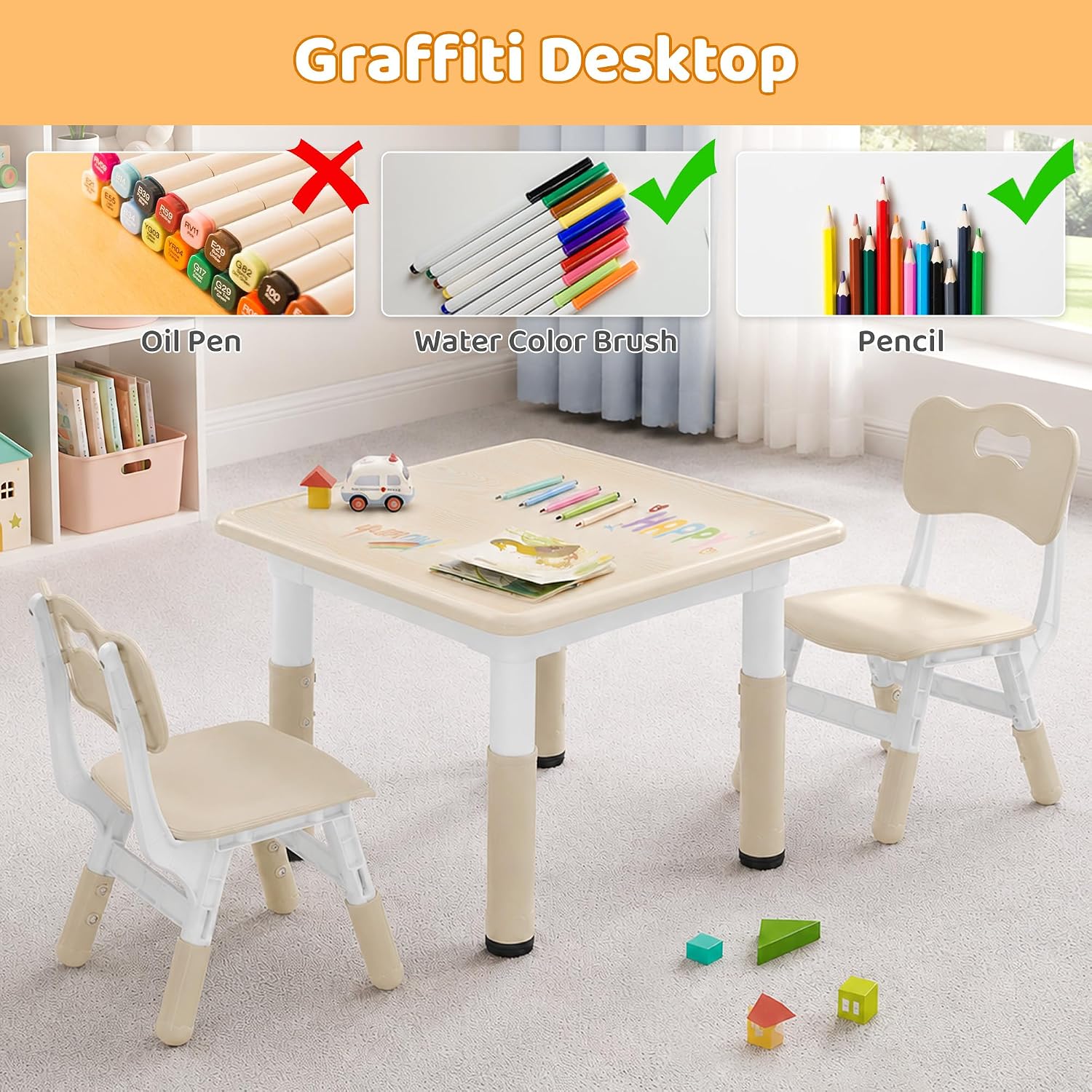
This is the highest-volume tier, and it’s where the buying decision gets genuinely complex. Tables here fall into two camps: flat-surface dedicated chalkboard tables, and 3-in-1 or 5-in-1 multi-function units with flip-top storage and sometimes a reversible surface (chalkboard on one side, whiteboard or corkboard on the other).
The Flat-Surface Dedicated Option
The GTOLV flat-surface chalkboard table is the standout durability reference in this tier. One owner reports two years of daily use with liquid chalk markers — a more demanding medium than traditional chalk sticks because the pigment is suspended in a water-based ink that can stain porous surfaces if the chalkboard coating isn’t dense enough. The owner explicitly notes clean wipe-off performance and no structural wobble or joint degradation after 24 months of daily use. That is the kind of time-stamped, use-specific data that matters when you’re deciding between a lower-priced unit and a premium one: the price gap often reflects exactly this kind of coating and joint quality.
Height
$59.02
In stock on Amazon
Check price on AmazonA quick note on liquid chalk markers: these are markers that look like paint pens and produce vivid, bright lines on chalkboard surfaces. They erase cleanly from a well-sealed surface but can ghost — leave a faint permanent stain — on surfaces with open pores or low-quality paint coats. Good Housekeeping’s 2025 review of toddler activity tables, “Best Toddler Activity Tables,” flags ghosting as the number-one complaint category in the one-to-three-star review band across this product cluster.
The Multi-Function Flip-Top Option
The Costzon 3-in-1 chalkboard activity table represents the multi-function category well. The flip-top lid doubles as an art slope when propped, the interior stores art supplies, and the chalkboard surface runs across the full tabletop. The age-calibration point raised by reviewers — that a two-year-old may struggle with lid weight while a three-year-old manages fine — is genuinely useful data that no product spec sheet includes. If your child is currently two and you’re buying ahead, budget for a few months of parent-assisted lid operation.
Costzon
$71.59
In stock on Amazon
Check price on AmazonThe High-Storage Preschool Option
The Kinder King chalkboard activity table distinguishes itself through storage architecture. Reviewers specifically enumerate three storage features: a built-in bookcase section, a flip-lid compartment, and under-chair soft bins. For a child in the 3–5 range who is accumulating art supplies, this is a meaningful organizational difference rather than a marketing distinction. The Spruce’s 2025 roundup, “Best Kids Activity Tables,” calls out integrated storage as a top-cited parent priority in the preschool segment, and the Kinder King’s storage density is among the highest in its price class.
Costzon
$71.59
In stock on Amazon
Check price on AmazonBy the numbers:
- Typical usable lifespan for MDF chalkboard tables with daily use: 2–4 years (per aggregated long-run owner reviews)
- Flip-top lid weight on most 3-in-1 units: 4–7 lbs (manageable by age 3+; challenging for age 2 and under)
- GTOLV owner-reported streak of clean daily liquid chalk marker wipe-off: 24 months
If X, then Y: If you want multi-function flexibility and the child is three or older, the Costzon 3-in-1 or the Kinder King are the defensible picks — prioritize Kinder King if storage is the deciding variable. If you prioritize surface durability above all else and want documentation to back it up, the GTOLV’s two-year owner data makes it the cleaner choice in the flat-surface category.
Stage Three: School-Age and Multi-Function Art Tables (Ages 5–10)
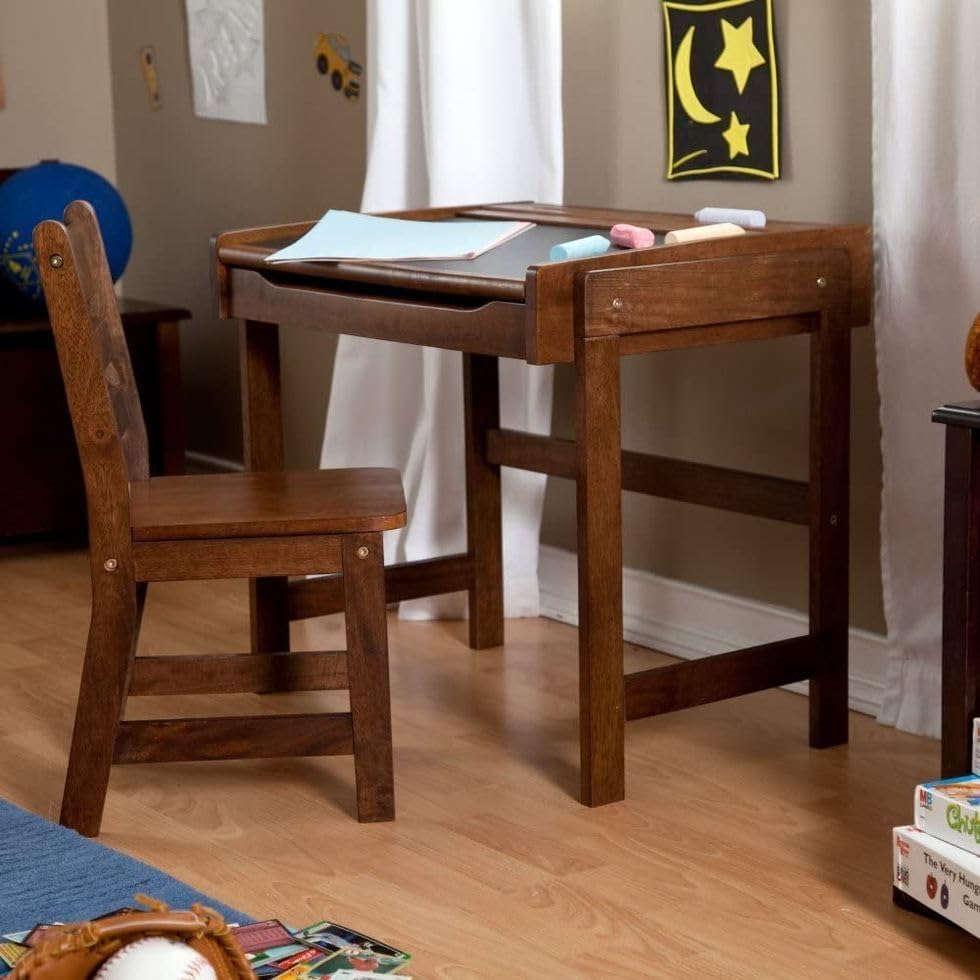
At the school-age tier, the product becomes less “activity table” and more “dedicated creative workstation.” The 5-in-1 chalkboard art table in this guide is the most feature-dense option in this guide’s scope — and reviewers flag it as the most complex assembly project in the cluster. If solo assembly is a hard requirement, this is the table where you want a second set of hands. Assembly difficulty doesn’t correlate perfectly with long-term quality, but it does correlate with joint alignment on first build, which affects wobble. Misaligned joints during assembly are the most common cause of early structural instability in this category.
Lipper
$105.99
In stock on Amazon
Check price on AmazonFor classroom and educator use, this tier is where surface durability and easy surface reset (wipe, re-use, repeat) become the dominant buying criteria. The ASTM F963-23 Standard Consumer Safety Specification for Toy Safety covers structural integrity as well as surface coatings, and any table destined for a classroom environment should carry documentation of compliance with that standard.
Frequently Asked Questions
What age is a Montessori weaning table appropriate for? Typically 6 months through 24 months, primarily as a high-chair transition piece. Once a child is solidly walking and can sit at a standard toddler chair without assistance, they’ve usually outgrown the weaning table’s proportions.
Can a toddler activity table chalkboard surface be used with liquid chalk markers? Yes, with caveats. Liquid chalk markers produce more vivid color than traditional chalk sticks and erase cleanly from high-quality, well-sealed chalkboard surfaces. On lower-density or thinner-coated surfaces, they can leave ghosting — faint residual staining. Good Housekeeping’s 2025 roundup “Best Toddler Activity Tables” identifies ghosting as the dominant complaint in low-star reviews for this product category. The GTOLV table has two-year owner-documented clean wipe-off with liquid chalk markers, making it the clearest documented reference point in this category. When evaluating any table for marker use, look for owner reviews that specifically mention marker (not just chalk) performance.
How heavy is the flip-top on kids’ activity tables — can a two-year-old lift it? Most flip-top lids in the 3-in-1 preschool segment run between 4 and 7 pounds. Reviewers on the Costzon 3-in-1 specifically note that a two-year-old finds the lid challenging while a three-year-old manages independently. Plan for parent-assisted operation if your child is currently under 30 months.
Do the chairs in these sets hold adult weight? Almost universally, no. Chairs in kids’ activity table sets are sized and rated for children — typical weight limits run 50–110 lbs depending on construction. The American Academy of Pediatrics, in its “Furniture Safety for Young Children” guidance published on HealthyChildren.org, notes that children’s furniture should be used by children only, and that exceeding weight ratings accelerates joint failure. If you need to sit beside your child regularly, use your own seating.
How long do wooden kids’ activity tables realistically last with daily use? Across aggregated long-run owner reviews, MDF-frame tables with quality coatings see 2–4 years of daily use before surface wear or joint loosening becomes a functional problem. Solid wood frames, where present, tend to outlast the surface coating. The GTOLV’s two-year clean daily-use record is a documented data point at the higher end of this range.
Which tables can be assembled by one person without help? The flat-surface dedicated tables in this guide — including the GTOLV and the weaning table — are generally reported as solo-assembly friendly. The Costzon 3-in-1 and Kinder King fall in the moderate category, manageable solo with patience. The 5-in-1 art table is the one reviewers most consistently flag as benefiting from a second person, primarily for aligning the hinge components on the flip easel mechanism.
The Decision Rule
If your child is under two: weaning table, full stop. Match the table height to the child’s standing hip height.
If your child is two to three: flat-surface dedicated chalkboard table — the GTOLV if surface durability is the priority. Hold off on flip-top multi-function units until the child can manage the lid weight independently.
If your child is three to five: the Costzon 3-in-1 or Kinder King depending on whether storage density or surface area is your primary variable. Kinder King wins on storage architecture; Costzon wins on footprint.
If your child is five or older and you want a long-term creative workstation: the 5-in-1 art table has the feature depth, but budget a solid two-hour assembly block and recruit a second adult.
We earn a commission on purchases made through links on this page — this doesn’t affect our recommendations, which are based on published specs and aggregated owner review data, not manufacturer relationships.