August 21, 2026 • Maren Calloway • 10 min reading time • Prices verified June 6, 2026
Framed Tabletop Chalkboard Boards for Home and Office: Surface Quality and Frame Durability Compared
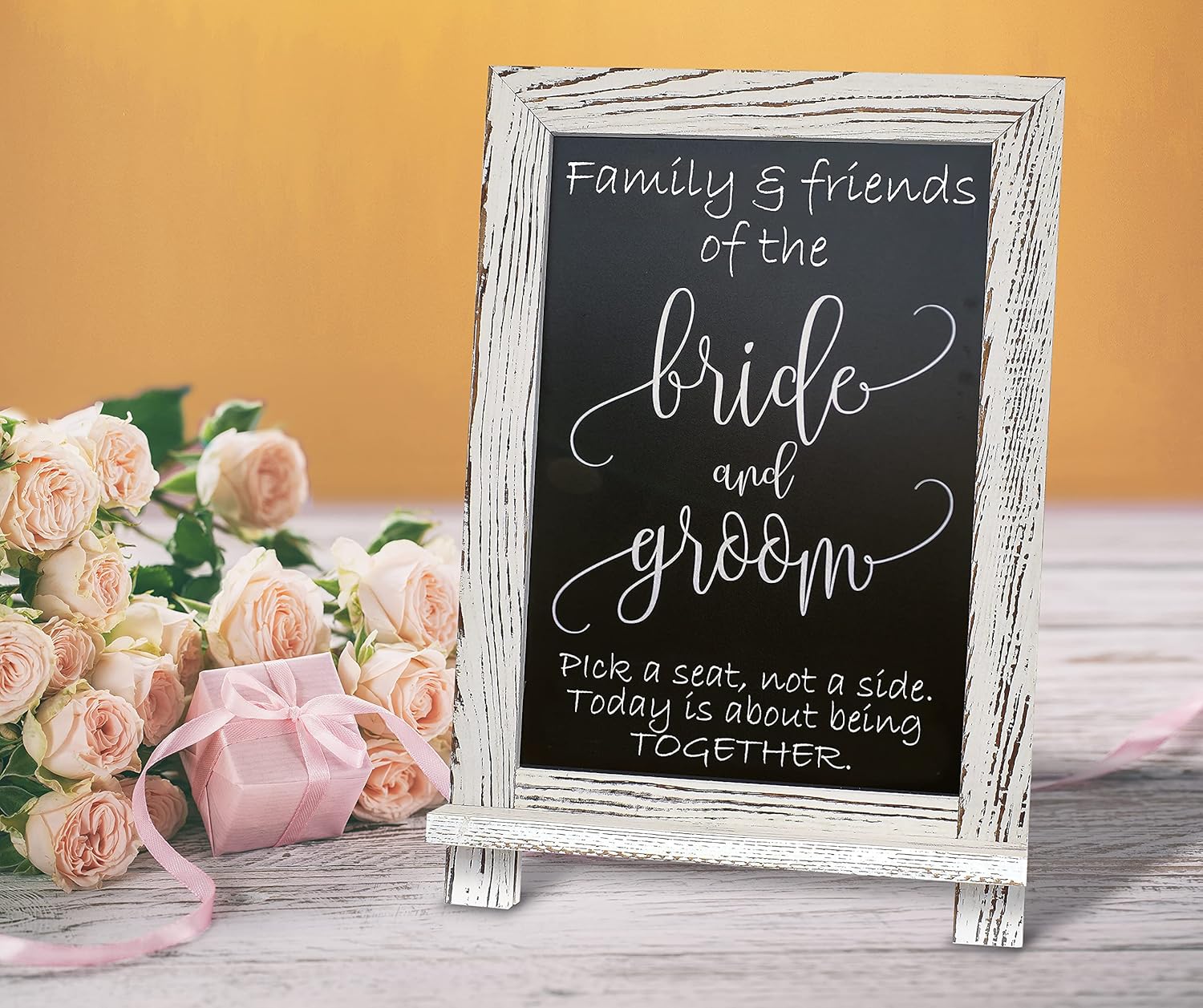
A framed tabletop chalkboard is exactly what it sounds like: a writing surface coated or constructed to accept chalk or chalk markers, mounted in a standing frame sized to sit on a desk, counter, shelf, or table rather than hang on a wall. You write on it, wipe it off, and write again — endlessly reusable, no app required. They show up everywhere from home offices and kids’ activity stations to restaurant menu displays and event seating charts. The catch is that “chalkboard” covers a wide range of actual materials, from genuine slate (a natural stone that has been used as a writing surface for centuries) to MDF (medium-density fiberboard, an engineered wood panel) coated with chalk paint, to tempered glass with a matte finish. The frame holding that surface together can be solid wood, hollow-core wood composite, powder-coated steel (steel with a baked-on color finish), or injection-molded plastic. Those distinctions determine how long the board will look good, how cleanly it erases, and whether it survives daily use in a commercial setting. This guide maps all of it so you can make the call that fits your budget and use case — and we’ll be upfront that our recommendations come from synthesizing published specs, manufacturer documentation, and aggregated owner reviews, not from owning or lab-evaluating these products ourselves.
| EDITOR'S PICKVersaChalk Kickstand Tabletop C… | Mid-tierMyGift Chalkboard Signs | Budget pickBetter Office Products Framed T… | |
|---|---|---|---|
| Board size | 13" x 9" | 12" x 7" | 9.5" x 14" |
| Frame material | — | — | Wood |
| Magnetic | — | — | ✓ |
| Stand type | Kickstand | Stand | Folding stand |
| Ledge | — | — | ✓ |
| Marker included | — | — | ✓ |
| Price | $24.99 | $19.99 | $18.99 |
| See on Amazon → | See on Amazon → | See on Amazon → |
Surface Material: The Decision That Drives Everything Else
The writing surface is where you’ll feel the quality gap most immediately, and where the price difference between a $35 board and a $180 board is either fully justified or completely cosmetic.
Genuine Slate
Slate is a fine-grained metamorphic rock that has been used as a schoolroom writing surface since at least the 18th century. It accepts standard chalk and chalk markers cleanly, releases them cleanly when wiped, and does not develop the “ghosting” problem — a faint residual image that won’t fully disappear — that plagues painted surfaces.
The Spruce, in their editorial overview “How to Season a Chalkboard So It Doesn’t Ghost,” explains that ghosting on non-slate boards typically begins within the first few weeks of use if the board is not properly “seasoned” first. Seasoning means coating the entire surface with the side of a chalk stick and wiping it away before any writing; this fills microscopic pores in the coating so subsequent marks don’t stain permanently. Slate doesn’t need seasoning because it has no paint film to stain. That’s the functional argument for paying the premium.
The trade-offs: slate is heavy (a 12×16-inch framed slate board can run 4–7 lbs depending on frame material), it is brittle if dropped, and the surface texture is naturally rougher than a painted MDF board, which chews through chalk slightly faster. Slate boards in tabletop formats are typically imported — sourcing transparency matters here, and reputable retailers will name the country of origin. Expect to pay $90–$200+ for a quality framed slate tabletop board.
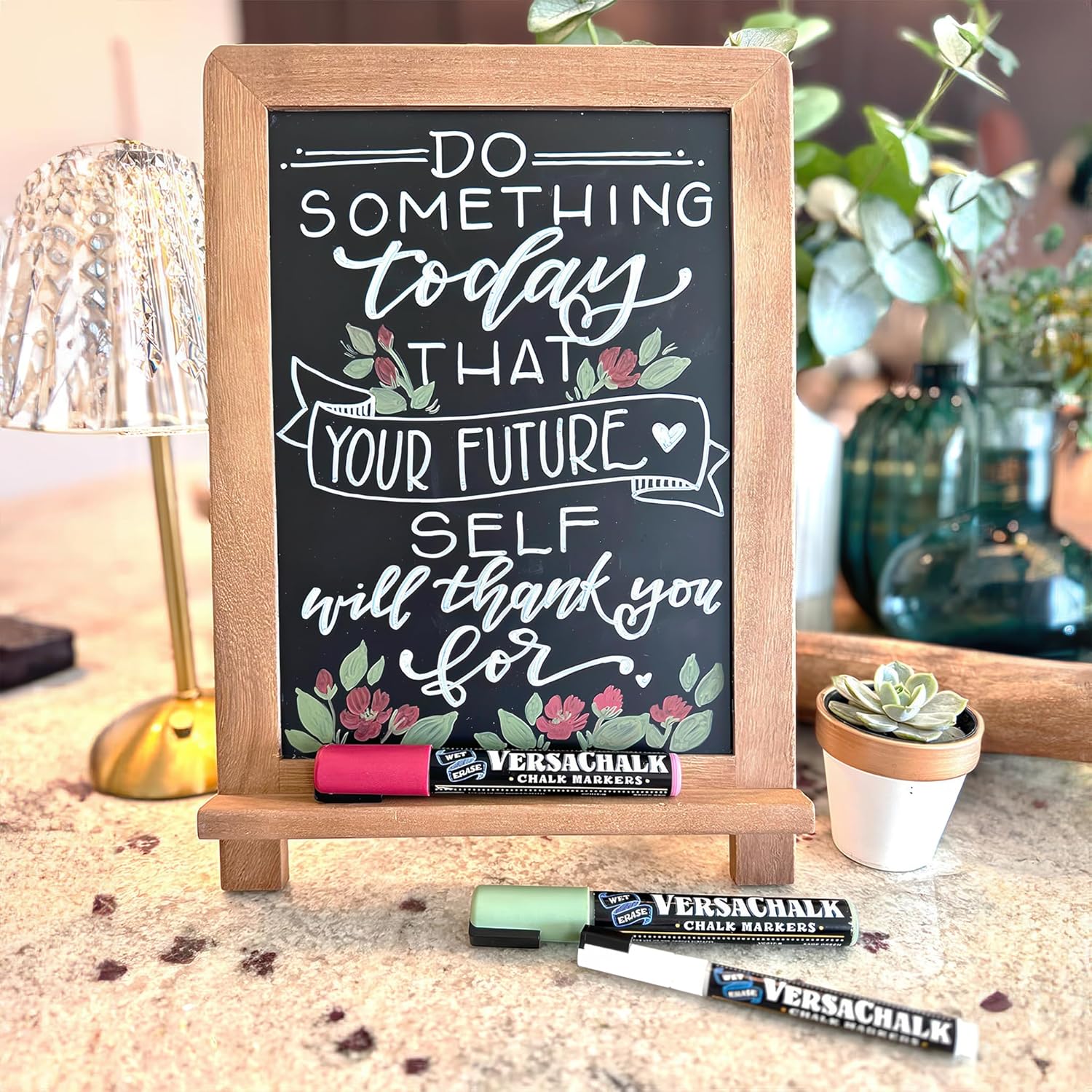
VersaChalk
$24.99
In stock on Amazon
Check price on AmazonMDF with Chalkboard Paint or Coating
MDF is the dominant substrate in the $25–$90 price range. It’s dimensionally stable (doesn’t warp as readily as solid wood in humidity changes), takes a smooth, consistent coating, and is easy to cut to size — which is why manufacturers use it. The quality question is entirely about the coating on top.
Factory-applied chalkboard coatings vary enormously. Higher-quality boards use multiple coats of a water-based chalkboard finish that has been sanded between coats; lower-quality boards get a single spray application. You cannot tell from a product photo. What you can check: look for boards that explicitly state the surface requires seasoning before use versus boards that claim “ready to write” — the latter often means the coating is thick enough to resist ghosting without the extra step, which is a real quality indicator. Bob Vila’s buying guide “The Best Chalkboard Paint Options” notes that single-coat finishes show ghosting within 30–60 days of regular use, while multi-coat or resin-fortified finishes can last 2–4 years before needing a touch-up coat.
MDF’s vulnerability is moisture. This Old House, in their comparison piece “MDF vs. Solid Wood: Which Is Right for Your Project?”, explains that MDF swells irreversibly when the core gets wet — relevant if the board is near a sink or used outdoors. A quality MDF board will have sealed edges (look for paint or a laminate strip on all four edges, not just the face). Unsealed MDF edges absorb humidity and eventually cause the coating to bubble or peel at the corners.

MyGift
$19.99
In stock on Amazon
Check price on AmazonPainted Steel, Tempered Glass, and Budget Composites
Painted steel surfaces — a thin steel sheet with a baked-on chalkboard finish — appear most often in commercial and hospitality product lines. American Metalcraft’s Tabletop Display Product Catalog 2025 lists several steel-surface chalkboard holders in the $40–$120 range designed for restaurant table and counter use. Steel won’t warp or absorb moisture, and the baked finish is harder than painted MDF, which means it resists scratching better. The trade-off is that chalk markers can be difficult to erase from steel without a damp cloth and some friction; dry-erase chalkboard markers (designed to wipe off dry) perform better than standard liquid chalk markers on these surfaces.
Tempered glass with a matte chalkboard coating is the premium outlier — typically $150–$300+ in the tabletop format — and is more common in the interior design segment. Glass is non-porous, so ghosting is essentially zero. It is also the heaviest option and the most fragile if the frame is lightweight.
At the low end, hollow-core composite boards with injection-molded plastic frames occupy the $20–$40 range. Neither surface nor frame is appropriate for high-frequency commercial use. These are acceptable for a child’s bedroom display or a one-time event, but daily handling will reveal their limits quickly.
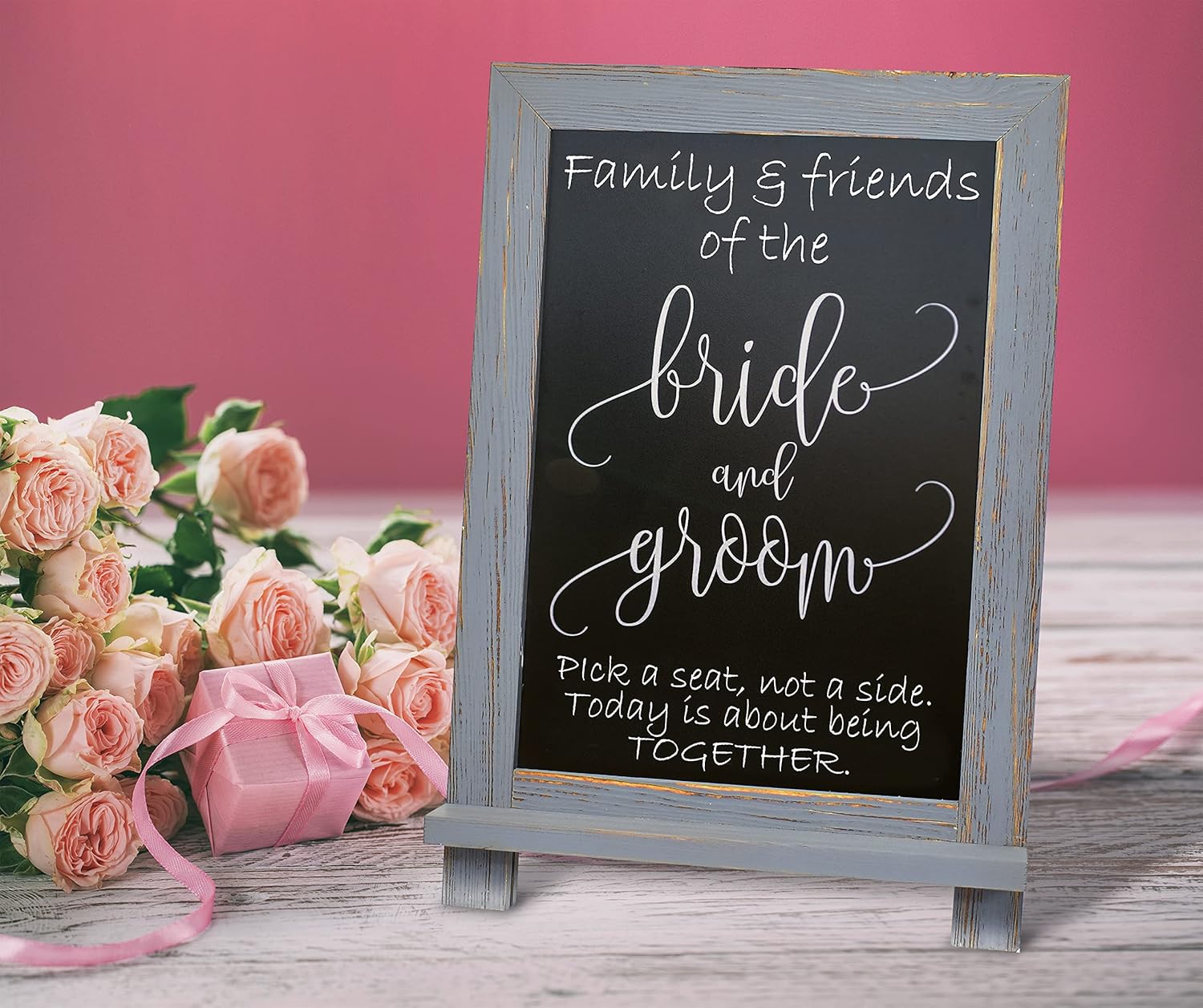
Better
$18.99
In stock on Amazon
Check price on AmazonFrame Construction: Where Budget Boards Cut Corners
The frame is structural and aesthetic. For tabletop formats, it also has to hold the board upright at a useful viewing angle, which means the stand or easel mechanism built into the frame takes real stress every time someone adjusts or repositions it.
Solid Wood Frames
Solid wood frames — pine, beech, walnut, and oak are the most common in this product category — offer real joinery (corners that are glued and doweled or mortise-and-tenoned) and will not crack at the corners under repeated handling the way MDF or hollow composite frames do. Good Housekeeping’s product roundup “Best Chalkboard Signs for Home and Office” consistently flags corner joint integrity as the primary failure mode in inexpensive frames within 6–18 months of regular use.
The grade of wood and the finish matter. Pine is lighter and less expensive; it dents more easily but is fine for a home office or low-traffic display. Hardwood frames (beech, oak) resist dings, hold hardware (screws, hinges) better, and age more gracefully. A powder-coated or lacquered finish on a wood frame extends its life in high-humidity environments.
Metal Frames (Powder-Coated Steel and Aluminum)
Powder-coated steel frames — steel with a color finish applied electrostatically and then baked, creating a durable skin that resists chipping better than spray paint — are the material of choice in the commercial and hospitality segment. They don’t crack, won’t absorb moisture, and can be manufactured with welded corners that have no failure mode short of intentional bending. American Metalcraft’s commercial tabletop display line builds its frames in this material for exactly this reason.
The downside in home and office settings is that metal frames feel utilitarian. If the aesthetic goal is “warm and inviting,” a powder-coated black steel frame has a more industrial feel than a natural walnut or whitewashed pine frame. For commercial operators where the board gets repositioned daily and handled by multiple staff members, that trade-off runs the other way.
Hollow-Core Composite and Plastic Frames
Both appear at the low end of the price range ($20–$45 boards). Corner joints on hollow-core composite frames are typically stapled or hot-glued rather than mechanically fastened, and they separate under repeated stress. Plastic frames in matte black can look credible in product photos but become visibly scuffed within weeks in a real workspace. These are acceptable for a child’s bedroom display or a one-time event — not for daily office or hospitality use.
Surface and Frame Comparison at a Glance
| Surface Type | Price Range (tabletop, framed) | Ghosting Risk | Best For |
|---|---|---|---|
| Genuine slate | $90–$200+ | Very low | Home office, design-forward display |
| Multi-coat MDF | $45–$90 | Low–moderate (season first) | Home, classroom, light office use |
| Single-coat MDF | $20–$45 | High | Occasional/event use only |
| Painted steel | $40–$120 | Low with damp erase | Commercial/hospitality, daily menu boards |
| Tempered glass | $150–$300+ | Negligible | Designer interiors, premium retail display |
The Seasoning and Ghosting Failure Modes — and How to Avoid Them
If you are buying an MDF-surface board — which covers the majority of what the market sells — the single most common owner complaint in aggregated reviews is ghosting within the first month. The fix is almost always proper seasoning before first use, and then periodic re-seasoning as the coating wears.
The Spruce’s editorial overview “How to Season a Chalkboard So It Doesn’t Ghost” recommends rubbing the entire face of a new board with the side (not the tip) of a white chalk stick, then wiping it fully away with a dry felt eraser, before writing anything on the surface. Skipping this step is the source of the overwhelming majority of early ghosting complaints in owner reviews.
Beyond seasoning, chalk type matters. Dustless chalk (the compressed type sold for classrooms) leaves less residue in the coating than traditional limestone chalk and erases more cleanly. Liquid chalk markers leave a semi-permanent mark on porous surfaces; they are designed for non-porous surfaces like glass or sealed steel. Using a liquid chalk marker on an unsealed MDF board without testing a small corner first is a recipe for a stain that won’t erase without recoating the entire surface.
Bob Vila’s buying guide “The Best Chalkboard Paint Options” also notes that even well-reviewed multi-coat surfaces benefit from a light re-seasoning every 6–12 months under regular use, particularly if the board lives in a high-traffic area where it’s erased and rewritten multiple times per day.
The Decision Framework: If X, Then Y
The middle of the market — $50–$120 for a quality framed tabletop board — is where most buyers should land, and the right call within that range depends entirely on use pattern and aesthetic priority.
If you need a board that handles daily use in a commercial setting (menu display, event signage, hospitality), prioritize a painted steel or multi-coat MDF surface in a powder-coated metal frame. American Metalcraft and similar commercial-grade suppliers are the right sourcing channel here, not general retail. Budget $60–$150 per unit.
If you’re buying for a home office or professional desk and want it to look good for years, the case for genuine slate is strong even at $120–$180 — you won’t be recoating it, you won’t be fighting ghosting, and the visual weight of slate reads as more deliberate than painted board. A solid wood or powder-coated frame at this price point should have real corner joinery; check the product description for “mortise,” “doweled,” or “welded corners” as signals of frame quality.
If budget is the primary constraint and the use is light (occasional to-do lists, a child’s activity station, seasonal event display), a well-reviewed multi-coat MDF board with a solid pine frame in the $40–$65 range is a reasonable buy — but season it properly before first use and expect to touch up or replace the surface in 2–3 years with regular use. This Old House’s guidance on MDF durability is useful context here: sealed edges are non-negotiable even on budget boards.
If the board is a design statement piece in a styled interior, tempered glass in a minimal metal frame at the high end of the market is worth considering — the zero-ghosting performance and the visual clarity of the surface justify the premium if the aesthetic is the point.
The surface type is the permanent decision. The frame can be refinished or replaced. Good Housekeeping’s chalkboard roundup makes this same point: buyers who regret their purchase almost always wished they had spent more on surface quality and less on decorative frame details. Get the surface right first, then let frame aesthetics follow your space.