September 9, 2026 • Maren Calloway • 9 min reading time • Prices verified June 6, 2026
Lift-Top Coffee Tables Near the Chalkboard-Top Price Tier: Surface Material Trade-offs for Style-Forward Buyers
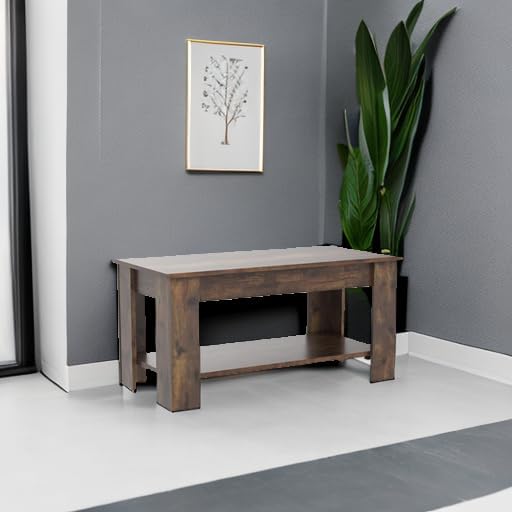
A lift-top coffee table is exactly what it sounds like: a coffee table whose top surface lifts and tilts upward on a spring or hinge mechanism, creating a raised work or dining surface at sofa height. They’ve moved well past “college apartment hack” into genuinely design-forward territory — you’ll find them at West Elm, CB2, and a growing number of Etsy boutique makers alongside the straight-top statement pieces. What’s less obvious — and what this guide is here to untangle — is how the surface material on that lift-top changes the entire ownership calculus, especially when you’re shopping in the $300–$900 price band where chalkboard-top tables and their closest alternatives compete directly. Whether you’re after the interactive chalk surface, a maintenance-free option that only looks the part, or something in between, the material choice is the decision that will define your experience for the next five to ten years. Here’s the honest breakdown.
| EDITOR'S PICKHSH Wood Coffee Table with Stor… | Mid-tierFDW Lift Top Coffee Table with… | Budget pickYaheetech Lift Top Coffee Table… | |
|---|---|---|---|
| Lift-top | — | ✓ | ✓ |
| Hidden storage | — | ✓ | ✓ |
| Storage shelf | ✓ | ✓ | — |
| Length | — | 39.4" | 38.6" |
| Color | Rustic brown | Brown | Grey |
| Tiered | ✓ | — | — |
| Price | $139.99 | $59.99 | $59.98 |
| See on Amazon → | See on Amazon → | See on Amazon → |
Why Surface Material Matters More on a Lift-Top Than on a Standard Table
On a static coffee table, the surface takes incidental contact — a glass, a book, the occasional laptop. On a lift-top, the surface becomes a workspace: it gets dragged, pressure-written on, pushed back into position, and loaded with plates or electronics at elbow height. That changes the wear calculus significantly.
Apartment Therapy’s coverage of lift-top coffee tables consistently flags surface durability as the top long-term complaint across owner reviews, outpacing mechanical hinge failures by a notable margin. A surface that looks flawless at point-of-sale can develop micro-scratches, chalk ghosting (residue that won’t fully erase — more on this below), or delamination within 12–18 months of active use if the material wasn’t spec’d for that kind of contact.
The four surface types you’ll encounter in the chalkboard-top price tier:
- True slate — the premium option, a naturally occurring stone quarried and milled to thickness
- MDF with chalk paint or chalkboard coating — medium-density fiberboard (a compressed wood composite) painted with a specialty low-sheen finish that accepts chalk
- Powder-coated steel or aluminum tops — a baked-on paint process that produces a hard, matte surface; some accept chalk, most do not
- Tempered glass with underlayer — glass treated under heat to be far stronger than standard glass, sometimes paired with a colored or patterned backing
Each of these hits the $300–$900 window depending on frame material, brand positioning, and scale. Each involves a real set of trade-offs that don’t show up in the product photography.
Slate vs. MDF Chalk-Painted: The Core Material Showdown
This is the comparison that most buyers in this tier need to make first, because it’s the one with the biggest gap between perceived and actual performance.
Slate is genuinely functional chalk surface material. It’s porous in the right way — chalk pigment sits in the texture, erases cleanly, and doesn’t develop the streaky “ghosting” pattern that ruins MDF surfaces over time. Ghosting, for readers new to the term, is the faint shadow left behind after erasing chalk, caused by chalk dust embedding in the binder layer of a painted surface rather than in a natural stone grain. On slate, seasoning (the process of rubbing chalk across the entire surface and erasing it before first use, conditioning the pores so they accept chalk evenly) is a one-time ritual that produces durable results. This Old House’s overview of chalkboard surface preparation confirms that unsealed slate responds to seasoning in a fundamentally different way than MDF-based boards — the improvement is longer-lasting and more uniform.
The trade-off is weight and price. Slate tops add 15–40 lbs depending on thickness, which matters for the lift mechanism — a spring-assist hinge rated for a lighter MDF panel may feel stiff or fail faster under a slate load. Dwell’s coverage of chalkboard surfaces in modern interiors notes that architect-specified slate installations almost always involve frame upgrades to accommodate the mass. In the $400–$900 tier, well-built slate-top lift tables from boutique Etsy makers or specialty furniture studios do exist, but you’re paying for the engineering on both the stone and the hinge, not just the aesthetic.
MDF with chalkboard coating is where most of the $300–$600 lift-top market actually lives. The Spruce’s explainer on chalkboard paint notes that quality varies enormously: commercial-grade chalkboard coating (thicker, harder binder, fine texture) behaves meaningfully better than DIY-grade brush-on paint, but neither matches slate for long-term ghost resistance. Expect 12–24 months of good performance on an MDF top with regular use before ghosting becomes visually distracting. Refinishing is possible — a light sand and recoat extends the surface — but it’s a half-day project most buyers don’t anticipate at purchase.
The lift-top mechanism interaction is gentler here: MDF panels are lighter, hinges spec’d for them tend to be more widely available, and replacement hardware is cheaper. For buyers who want the chalkboard aesthetic at accessible price points and don’t mind occasional maintenance, MDF-coated surfaces remain the rational majority choice.
By the Numbers
| Surface | Typical Price Premium vs. Standard Top | Expected Ghost-Free Lifespan (active use) | Weight Impact on Hinge |
|---|---|---|---|
| True slate | +$150–$300 | 5–10+ years | High (re-spec hinge often required) |
| MDF chalkboard coating | +$40–$100 | 12–24 months before visible ghosting | Low to moderate |
| Powder-coat steel | +$60–$150 | N/A (not a chalk surface) | Moderate |
| Tempered glass | +$80–$200 | N/A (not a chalk surface) | Low |
Powder-Coat and Tempered Glass: When You Want the Look Without the Maintenance
Both of these surface types appear in the chalkboard-adjacent space — matte black powder-coat especially reads as “chalkboard” in room photography, which is why you’ll see them marketed alongside true chalk surfaces.
Powder-coat is a finishing process where electrostatically charged dry powder is applied to a metal surface and then cured under heat, producing a hard, even, scratch-resistant coating. It is not a chalk surface. Chalk will write on it in a pinch, but the texture doesn’t hold pigment well and cleaning becomes a streaky frustration. Where powder-coat earns its place in this comparison is durability as a workspace surface — for buyers who want a lift-top primarily for laptop use, eating, or occasional note-taking (with a notepad, not chalk), powder-coated steel or aluminum tops are nearly indestructible and easy to clean.
Architectural Digest’s roundup of statement coffee tables worth the investment points to powder-coat frames as the premium durability signal in designer occasional tables — the finish resists chipping for a decade of normal use, compared to lacquered wood which can show edge wear in 2–3 years. For the lift-top format, powder-coat tops are typically lighter than slate and heavier than MDF, landing in a mid-range that works with most commercial hinge hardware.
Tempered glass is the other “looks like it could be a chalkboard” option — particularly in smoke, slate blue, or matte black versions. Furniture Today’s 2025 occasional tables market report notes steady growth in tinted tempered-glass tops at the $350–$700 price point, driven by buyers who want easy cleaning and visual drama without surface upkeep. Glass does not accept chalk at all. Its payoff is purely aesthetic and maintenance: a damp cloth removes everything. The fragility concern is largely overstated for tempered glass (it’s roughly four times stronger than standard glass, per the tempering process), but it’s not zero — a sharp lateral impact from moving furniture can crack it, and replacement tops can be costly.
For the lift-top format specifically, glass tops need a well-designed edge seal where the top meets the hinge hardware, because moisture can wick under a poorly fitted frame and cause long-term issues with MDF substrates if the frame uses them.
Frame Material and Hinge Quality: The Hidden Variables in This Price Tier
Style-forward buyers in the $400–$900 range tend to focus almost entirely on the surface material decision — which makes sense, because it’s the first thing you see. But across aggregated owner reviews on lift-top coffee tables at this price point, the hinge and frame quality consistently predict long-term satisfaction more reliably than surface finish.
Solid wood frames — oak, walnut, maple, acacia — are the premium pick for stability and longevity. Solid wood tolerates humidity changes better than MDF frames, which can warp if the lift mechanism allows moisture ingress at the seams. A warped frame on a lift-top table creates alignment problems: the top won’t sit flush when lowered, which accelerates wear on both the surface and the hinge pivot points.
Powder-coated steel frames are the commercial-grade choice, used by most hospitality-adjacent furniture lines. They don’t warp, they tolerate heavier tops (relevant for slate), and replacement hinge hardware is standardized. The aesthetic is more industrial-modern than warm-residential, but for buyers who want the table to last a decade of heavy use without maintenance anxiety, steel frames with solid-wood accents thread the needle.
MDF frames with veneer are common in the $300–$500 range and represent the value trade-off honestly: the aesthetic reads beautifully at purchase, and the structure is adequate for light-to-moderate use. The failure point is moisture and load — avoid MDF-frame lift-tops in humid rooms or near windows with condensation issues, and don’t use the lift surface for heavy work sessions daily.
The Decision Framework: If X, Then Y
After spending time with the published specs, retailer documentation, and aggregated owner reviews across this category, here’s where the decision tree lands for buyers in this tier:
If you want true chalkboard interactivity and are buying for a premium living space: budget for a slate-top from a boutique maker who discloses the hinge spec. Confirm the mechanism is rated for the slate panel weight. Accept the $600–$900 price point as the cost of durability, not the cost of aesthetics.
If you want the chalkboard look for a playroom, rental, or secondary living space: an MDF-coated top in the $350–$550 range is the rational call. Plan for a surface refresh at 18–24 months (budget $20–$40 for a chalkboard spray touch-up), and choose a frame in solid wood or powder-coat steel rather than MDF-frame construction.
If you want a low-maintenance statement surface that photographs like a chalkboard: powder-coat steel top with a matte black finish, solid-wood or steel frame, in the $400–$700 range. You lose chalk functionality entirely and gain a surface that requires almost no care. This is the right answer for heavy daily use where chalk writing isn’t the actual use case.
If you’re choosing between two similarly priced options and one has a better hinge: take the better hinge. Surface materials can be refinished or replaced. A failed lift mechanism on a welded or proprietary-fit frame often means a new table.
The style payoff in this tier is real — lift-top chalkboard-adjacent tables at $400–$900 represent a genuine interior design upgrade, not just functional furniture. The buyers who end up most satisfied are the ones who matched the surface material to their actual use pattern, not the use pattern that made the table look most appealing in the listing photos.