September 21, 2026 • Maren Calloway • 11 min reading time • Prices verified June 6, 2026
Mini Chalkboard Signs for Reuse: Which Boards Ghost, Which Frames Crack, and Which Last a Full Market Season

Mini chalkboard signs — those small, framed blackboard panels that vendors prop up next to jars of honey or handmade candles at a market stall — look simple enough. But if you’re running a booth every Saturday from May through October, “simple” gets complicated fast. Ghosting is what happens when old chalk writing leaves a faint, permanent shadow on the board even after you’ve wiped it clean. Seasoning is the prep step — rubbing the side of a chalk stick across the whole surface and erasing it before first use — that dramatically reduces ghosting risk. And the frame, whether thin MDF (medium-density fiberboard, a pressed-wood composite) or solid-wood molding, determines whether your sign survives twelve months of being loaded into a milk crate and hauled to a parking lot every weekend.
This article is for the repeat vendor, not the one-time wedding decorator. The durability bar, the cleaning routine, and the frame expectations are completely different once you’re reusing the same pack of signs twenty or thirty times. Based on aggregated reviewer patterns, published vendor specs, and sourcing intel from market-vendor communities, here is what actually separates a sign that lasts a full market season from one that becomes a ghost-riddled frustration by week four.
| EDITOR'S PICK12 Pack Mini Tabletop Chalkboar… | Mid-tierMini Chalkboard Signs | Budget pick20 Pack 4"x3" Mini Chalkboard S… | |
|---|---|---|---|
| Pack count | 12 | 20 | 20 |
| Board size | 5 x 6 in | — | 4 x 3 in |
| Frame material | Wood | Wood | — |
| Stand included | ✓ | ✓ | — |
| Shape | — | Framed | — |
| Price | $20.99 | $12.99 | $7.99 |
| See on Amazon → | See on Amazon → | See on Amazon → |
The Ghosting Problem Is Real — and Almost Always Preventable
Ghosting is the dominant complaint across every segment of mini chalkboard sign reviews, and it is worth separating the product problem from the user-error problem before you make a buying decision.
The Spruce, in their guide “How to Season a Chalkboard,” identifies the core mechanism: an unsealed or undertreated surface absorbs chalk pigment into the pores of the material rather than letting it sit on top, and once pigment is in the pores, standard dry erasure will not pull it out. This is the same failure mode that ruins expensive slate-top surfaces and budget sign packs alike — price point does not protect you if the surface treatment is wrong.
Across aggregated reviews, the pattern is consistent: buyers who season their boards before first use and who use regular chalk rather than chalk markers report far fewer ghosting complaints. Chalk markers — the liquid paint-based markers that resemble felt-tip pens — are the single biggest source of permanent ghosting on budget sign packs. Apartment Therapy, in their piece “The Best Chalkboard Markers and How to Use Them,” notes that oil-based chalk markers in particular require specific solvent cleaners for full removal; a dry cloth will not touch them.
The product-level difference matters here. Budget packs frequently use surfaces that are essentially printed stickers over a wood or cardboard substrate. Sticker surfaces do not season and do not clean the same way as a painted or lacquered surface. If you are buying for reuse, that distinction matters more than price per unit. The product specifications to look for are “chalkboard-painted MDF” or “lacquered chalkboard surface” — if a listing does not specify, treat the surface as potentially sticker-based and proceed accordingly.
Frame and Surface Comparison: Three Tiers for Repeat Vendors
Not all mini chalkboard frames are built for the same duty cycle. Here is how they break down across three performance tiers, based on aggregated repeat-vendor experience.
Budget Tier: Thin MDF Multi-Packs
Thin MDF frames, common in multi-packs priced under twenty dollars, absorb humidity at the joints. The mitered corners — the 45-degree angled cuts where frame pieces meet — are the first failure point. Reviewers using signs at barn sales and flea markets report corner separation starting around the eight-to-twelve-week mark when signs are exposed to morning dew and then stored in a warm vehicle. Once the joint opens, the frame is functionally done; re-bonding rarely holds through another season of outdoor use.
The easel strut — the folding kickstand on the back — is attached with a single staple or brad nail on most budget packs. Repeated opening and closing fatigues the attachment point, and by mid-season many vendors report the strut pulling free entirely. For a static indoor display or a single-event use, these packs are entirely acceptable. For weekly outdoor markets, they typically fail before the season ends.
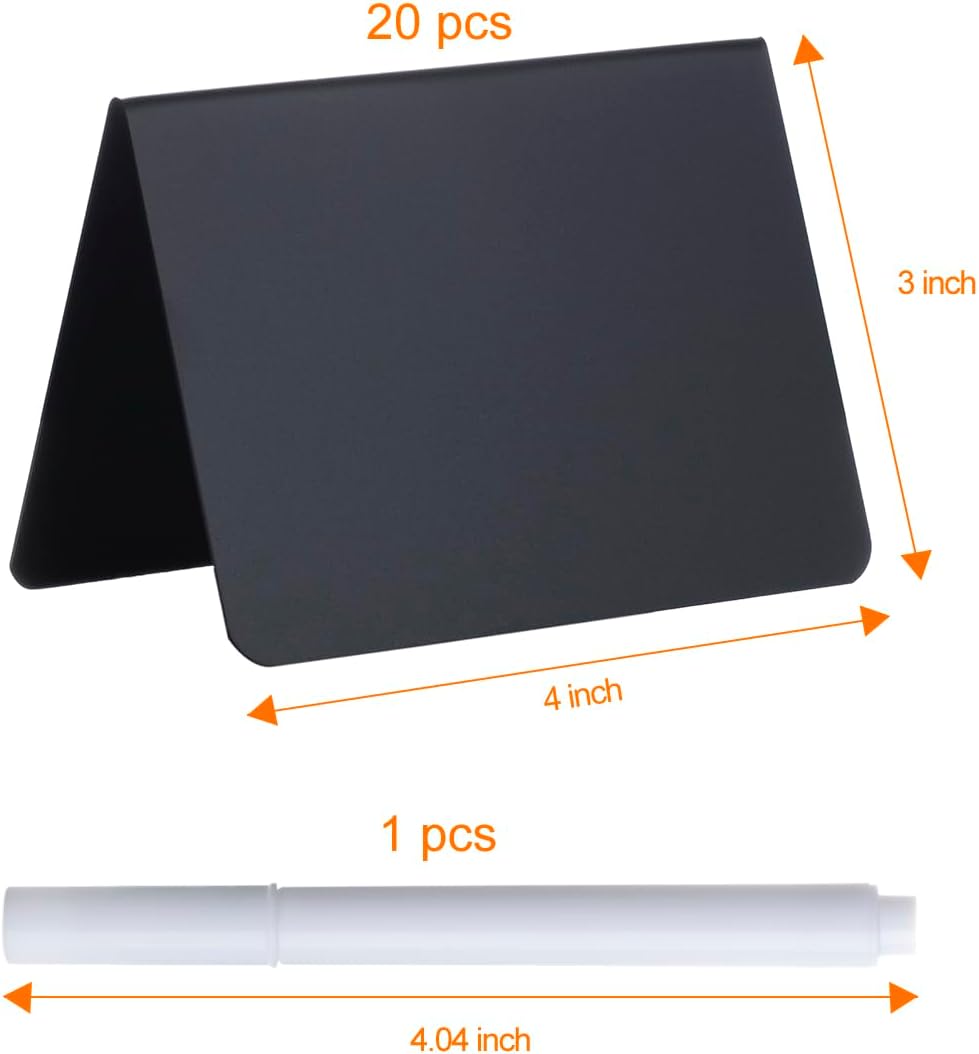
20
$7.99
In stock on Amazon
Check price on AmazonMid-Tier: Solid-Wood Frames with Secured Struts
Solid-wood frames in pine, poplar, or birch cost more per unit but tolerate moisture cycling significantly better because the wood’s natural density resists swelling at the joints. This Old House, in their guide “Chalkboard Paint: Everything You Need to Know,” identifies pine as the baseline acceptable choice for painted wood applications and poplar as the step-up for dimensional stability — the same hierarchy applies to sign frames exposed to outdoor conditions.
Mid-tier packs with screwed or riveted strut hardware — rather than stapled — survive a full season of weekly breakdown and reassembly. Surface wear typically becomes the limiting factor before structural failure does, which is the correct failure mode: a worn surface can be lightly sanded and repainted; a blown joint means a new sign.
Mini
$12.99
In stock on Amazon
Check price on AmazonPremium Tier: Metal and Magnetic-Frame Designs
Metal-frame and magnetic-leg designs take a fundamentally different approach to the strut-fatigue problem by eliminating the single-staple attachment entirely. Reviewers of magnetic-leg sign boards report genuine surprise at how well the removal mechanism holds up over repeated assembly and breakdown, earning consistent praise for surviving a second and sometimes third full market season without structural failures. These are the signs that show up in experienced vendors’ kits alongside the chalks and the cleaning supplies — bought once and replaced by choice rather than necessity.
The surface quality on premium-tier signs also tends to be more consistent: smoother, more uniformly treated, and more resistant to the ghosting that plagues budget packs. Multiple owners of higher-end framed boards specifically note clean erasure without residual shadow from previous lettering — a direct result of the more durable surface coating.
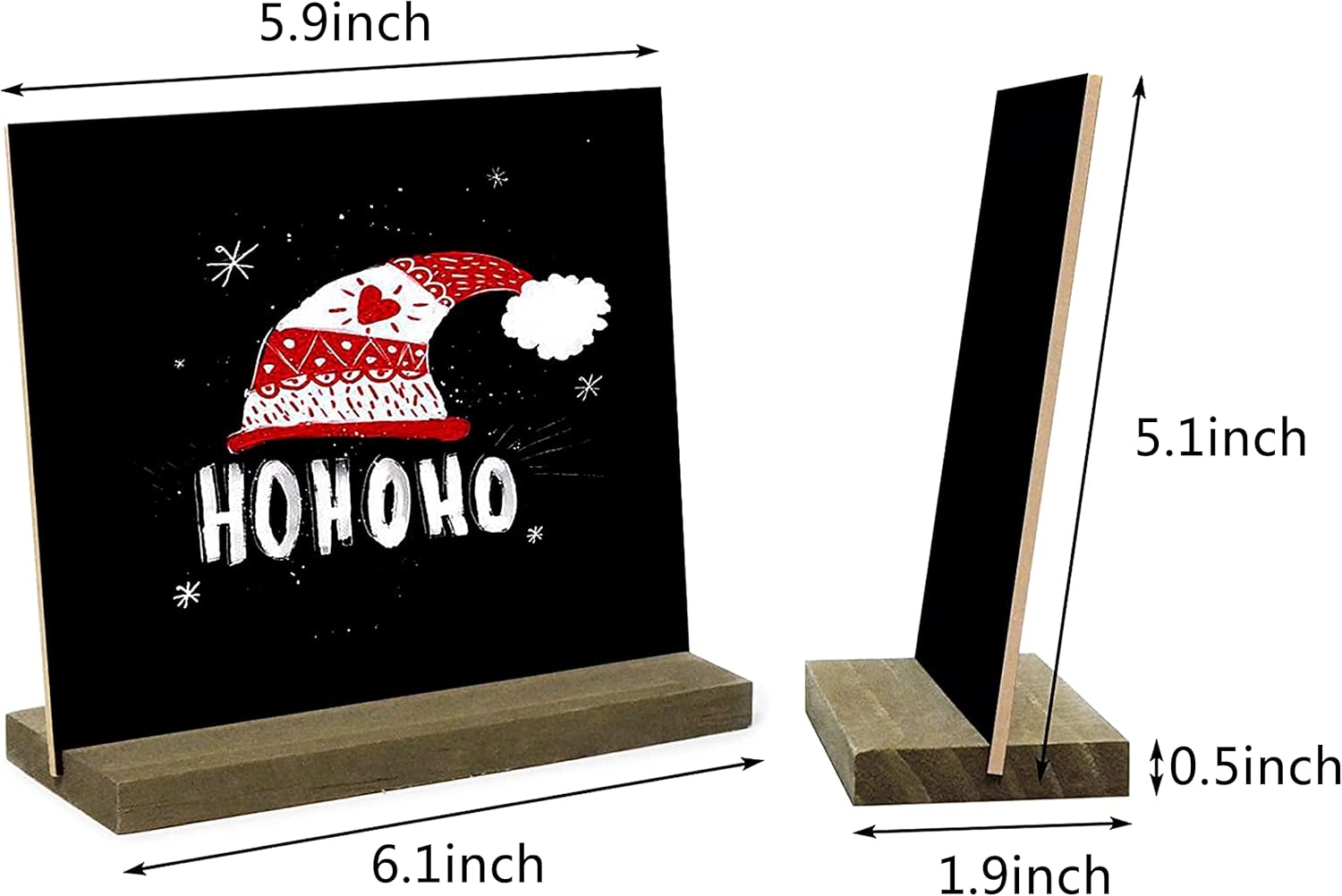
12
$20.99
In stock on Amazon
Check price on AmazonFrame Durability at a Glance
| Frame type | Avg. reported failure point | Main failure mode | Tier |
|---|---|---|---|
| Thin MDF, stapled strut | Weeks 8–12 (outdoor use) | Corner separation, strut pull-out | 20 — $7.99 |
| Solid pine or poplar, screwed strut | End of season one | Surface wear before structural failure | Mini — $12.99 |
| Metal or magnetic frame | Two or more seasons | Minimal reported structural failures | 12 — $20.99 |
Outdoor Wind: Stability Is Not a Given
Wind stability is a recurring outdoor-vendor concern that rarely appears in product listings but dominates the real-world review record. Lightweight frame designs are explicitly flagged by multiple reviewers as unsuitable for windy days — the shallow easel angle means any significant breeze tips the sign. For a static indoor display, that is fine. For an outdoor market stall with steady airflow from a nearby parking lot, it is a problem you will discover at the worst possible time.
The practical variables that determine wind stability in small easel signs:
- Base footprint — a wider easel spread creates more resistance to lateral tipping. Narrow struts where the back leg is barely wider than the sign itself are the most vulnerable.
- Sign weight — heavier MDF or solid-wood boards are more stable than thin chipboard or cardboard-core signs, despite the durability trade-off noted above.
- Surface orientation — a sign propped face-into-the-wind acts as a sail; positioning signs parallel to prevailing wind or slightly angled is a workaround experienced vendors use.
If you are doing outdoor markets regularly, the reviewer consensus points toward either weighted-base signs (those with a small built-in platform rather than a folding strut) or supplementing any lightweight pack with small adhesive putty dots under the base to add friction against the table surface. The putty approach shows up often enough in vendor practice to be worth noting as a low-cost workaround.
The Single-Event vs. Repeat-Vendor Cleaning Protocol
This is the operational detail that most buying guides miss entirely: the cleaning method that works for a one-time setup is not the same as what you need if a sign has been written on for three or four days straight and left in direct sunlight.
Good Housekeeping, in their guide “How to Clean Chalkboard Paint and Surfaces,” corroborates the general principle: residue that has been heat-set by sunlight or allowed to dry fully into an untreated surface requires a mild abrasive or a degreaser — not just water. The cleaning products that experienced vendors name most consistently are Mr. Clean Magic Eraser (a micro-abrasive foam pad) and Krud Kutter (a water-based degreaser commonly used in surface prep for painting), both available at hardware retailers.
The risk with micro-abrasive pads is that over many uses they begin to scuff a soft painted surface, which increases its porosity and makes future ghosting more likely. On harder, lacquered surfaces — the kind found on premium-tier signs — this cycle is slower. On budget sticker-surface boards, a single Magic Eraser pass can damage the surface coating permanently.
The practical rule for repeat vendors: if your signs are written on with regular chalk and erased within 24–48 hours, a damp cloth handles it. If they are written with chalk markers, or left in place for a multi-day event, budget for Krud Kutter or a Magic Eraser in your kit — and plan that your surface will have a shorter total lifespan if you are doing chemical cleaning every week.
Can You Write on Both Sides? The Double-Sided Question
Several framed mini chalkboard sign packs are marketed as double-sided, meaning both faces have a chalkboard surface. In practice, reviewers note two complications.
First, most framed designs prioritize one display face and give the back a rougher, sometimes unpainted surface — so “double-sided” in the listing may mean “writable on both sides in theory” rather than “equally usable on both sides.” Reviewer photos of the back surface are the most reliable way to verify this before purchasing.
Second, the frames on thinner packs do not handle writing pressure on both sides equally. Writing on the back of a thin MDF sign while it is propped on its front face can flex the board enough to crack the surface coating on the front over time. Reviewers of heavier solid-wood framed signs report this problem far less frequently.
Frequently Asked Questions
How do you fully remove chalk marker ink from mini chalkboard signs without ghosting? Chalk marker ink is liquid-paint-based and will not wipe with a dry cloth. Apartment Therapy’s guide “The Best Chalkboard Markers and How to Use Them” recommends starting with a damp microfiber cloth, then moving to a cotton pad with isopropyl alcohol for persistent residue. For oil-based chalk markers specifically, vendor reviewers consistently name Krud Kutter as the most effective option. Season the board after cleaning to restore surface integrity.
Do mini chalkboard easel signs stay upright in outdoor wind at a market stall? Lightweight packs tip in moderate wind. Heavier solid-wood-frame options or weighted-base designs perform better. Supplementing any easel sign with adhesive putty underneath is a common and inexpensive vendor workaround.
Is the chalkboard surface on budget packs a painted wood surface or just a sticker? Some are stickers. Listings that specify “chalkboard-painted MDF” or “lacquered chalkboard surface” are more reliable. If the listing does not specify the surface material, treat it as potentially sticker-surfaced and not suitable for repeated seasoning and cleaning cycles.
Can you write on both sides of framed mini chalkboard signs? It depends on the specific product. Genuinely double-sided boards exist, but “double-sided” in budget listings sometimes means only one face is properly finished. Check reviewer photos of the back surface before assuming equal usability.
How many reuses can you realistically get from a budget pack before ghosting becomes a problem? For chalk-only use with proper seasoning and 24–48-hour erase cycles, reviewers report fifteen to twenty-five uses with minimal ghosting on better-quality packs. Chalk-marker use or multi-day display shortens that window considerably, sometimes to fewer than ten uses before ghost images become visible.
What cleaning product works best on signs that have been written on for several days? Mr. Clean Magic Eraser for painted surfaces where light abrasion is acceptable; Krud Kutter for a chemical approach that does not abrade the coating. Both are identified by vendor-community reviewers as the practical escalation from a standard damp cloth when chalk has set in sunlight.
If X, Then Y: The Decision Rule
If you are doing weekly outdoor markets all season: prioritize frame durability — solid-wood or metal frame — and surface quality over pack size. Budget for Krud Kutter in your supply kit from week one, and choose premium-tier options with documented clean-wipe performance over budget multi-packs.
If you are doing a single multi-day indoor event: a well-seasoned budget MDF pack works fine with chalk-only writing. Skip the chalk markers entirely and your ghosting risk is minimal.
If wind is a real factor at your venue: avoid ultra-lightweight easel designs and either source a weighted-base design or supplement with adhesive putty as a stopgap.
If you are buying for a barn sale or market with extended display periods: treat the cleaning protocol as part of the product-selection calculus. The surface that wipes clean at day one may ghost at day four. Buy the tier that matches your actual duty cycle, not the one that looks sufficient on a product listing page.