September 3, 2026 • Maren Calloway • 10 min reading time • Prices verified June 6, 2026
Reversible-Top and Flip-Lid Kids Tables: Which Designs Actually Survive Two Years of Toddler Use
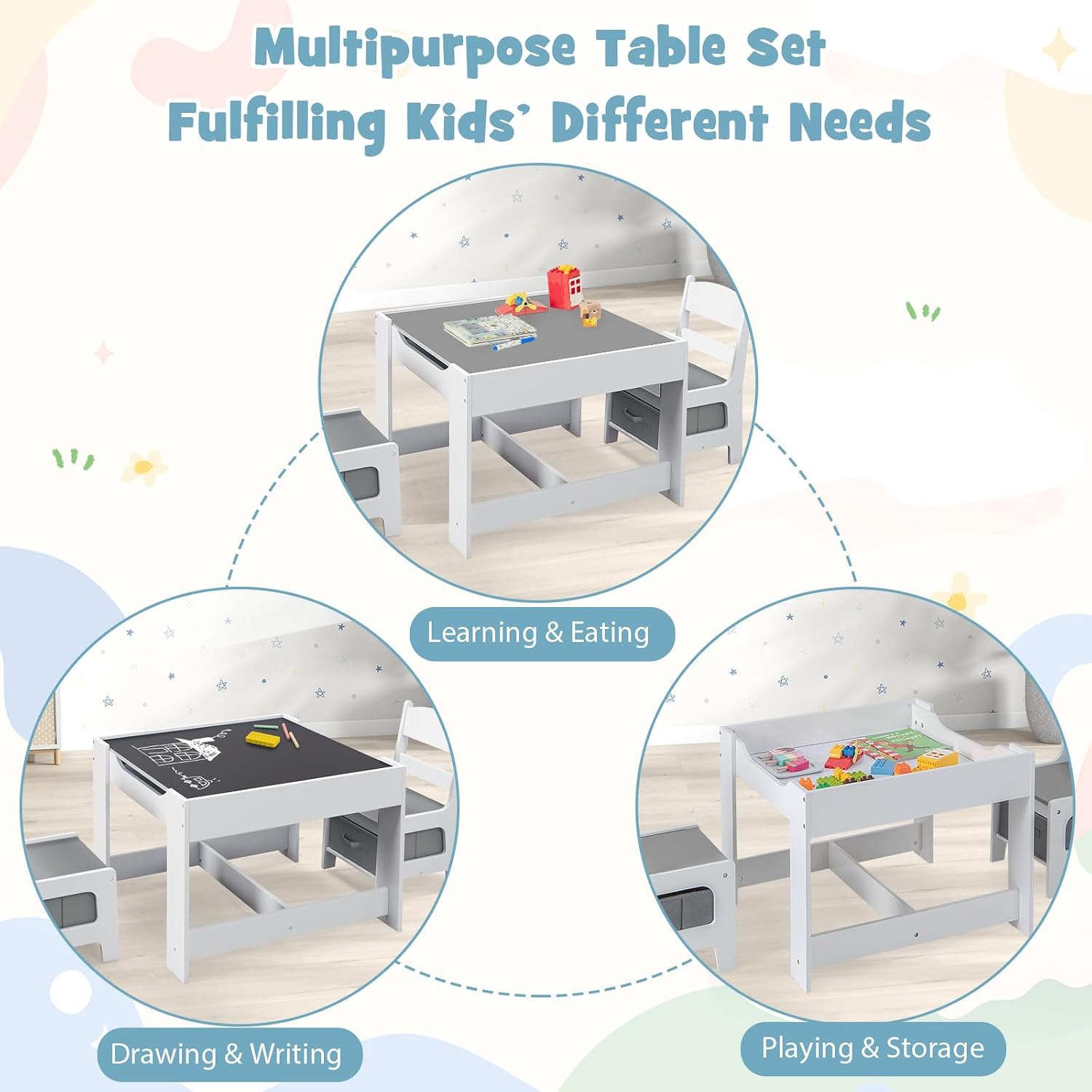
If you’ve been shopping for a kids’ activity table lately, you’ve probably noticed that a lot of them come with a reversible top — a tabletop that flips over to reveal a chalkboard surface on one side and a plain or activity-printed surface on the other. The pitch sounds great: one table, two functions, years of use. But once you start reading actual parent reviews rather than product marketing copy, a more complicated picture emerges. Lid weight, structural integrity after two years of daily punishment, and the real-world gap between “chalkboard side” and “side kids actually use” are three threads that keep surfacing across hundreds of reviews — and almost none of them get addressed honestly in buying guides. This article synthesizes what owners consistently report across the most-discussed tables in this category, so you can make a faster, more confident decision for your specific situation.
The Lid-Weight Problem: What Marketing Copy Won’t Tell You
This is the most under-discussed spec in the entire category. A reversible tabletop sounds simple — flip it, chalk on it, flip it back. In practice, the lid’s weight determines whether a three-year-old can operate the table independently or needs an adult every single time.
Across aggregated Costzon owner reviews from 2024–2025, one note appears repeatedly: “the top is a little heavy for tiny littles.” The same reviewers, interestingly, add a caveat — a self-described “3-year-old giant had no problem.” That’s actually a useful data point, not a contradiction. What it tells you is that lid operability is a function of both the lid’s weight (typically 3–6 lbs on MDF-core reversible tops in this price range) and your specific child’s size and grip strength, not age alone.
The practical decision rule here:
- If your child is under 36 inches tall or below the 40th percentile for their age group, factor in that they may need help flipping or lifting the top for 6–12 months after purchase.
- If independent play is a key requirement right now, look for tables with a thinner, single-panel chalkboard surface rather than a reversible flip lid — the lid weight is inherently lower.
- If you’re buying ahead (your 18-month-old will grow into it), the flip-lid design pays off sooner than you’d expect — most parents report kids managing the flip independently by age 3.5–4.
The Spruce’s updated 2025 kids’ activity table guide notes that lid-assist hinges — slow-close hardware that limits how hard the lid can slam — are appearing on newer mid-range models, and that detail is worth confirming in spec sheets before you buy.
Two-Year Durability: Climbing, Jumping, and What Actually Holds Up
Here’s where the category sorts itself out. The GTOLV activity table earns some of the most useful long-run owner feedback in the category: one parent reports her daughter used it every day for two years, including climbing on it, and it “stayed in great shape.” That’s not a throwaway comment — it’s the kind of real-world stress data that a two-paragraph product description will never give you.
What drives that durability? Based on published specs and owner pattern analysis across GTOLV reviews from 2023–2025, three structural factors keep coming up:
-
Frame material and joint construction. Solid-wood or hardwood-composite frames with mortise-and-tenon or bolt-through joints outperform particleboard frames with cam-lock hardware under dynamic load (bouncing, lateral force from climbing). The cam-lock systems you’ll find on budget flat-pack tables are fine for gentle use; they loosen under repeated impact.
-
Surface laminate thickness on the chalkboard side. Thinner MDF with a single coat of chalkboard paint is the first thing to show wear — corner chips within six months, surface ghosting (faint residue that won’t fully erase, even after proper seasoning) within a year. Thicker laminated chalkboard panels, or factory-applied chalkboard surfaces with a sealed edge, hold up noticeably longer.
-
Chair-to-frame attachment. For sets where chairs connect or stack against the table, the attachment points are frequently the first failure mode, not the tabletop itself.
By the numbers:
| Failure mode | Typical onset (owner reports) |
|---|---|
| Cam-lock joint loosening | 8–14 months with daily climbing use |
| Chalkboard surface ghosting | 3–6 months if not properly seasoned |
| Corner laminate chipping | 4–10 months on thin MDF edges |
| Frame wobble on solid-wood builds | Rarely reported before 24+ months |
(Seasoning, for first-time buyers, means rubbing the flat side of a piece of chalk across the entire chalkboard surface before first use, then erasing it — this fills the surface’s microscopic pores and prevents early ghosting. Skipping it is the single most common source of one-star chalkboard reviews.)
How Kids Actually Use These Tables (vs. How They’re Marketed)
Here’s the honest pattern across hundreds of reviews: most kids use the plain side more than the chalkboard side. Arts and crafts, LEGO builds, puzzles, snacks — the flat surface gets daily use. The chalkboard side tends to come out for drawing sessions and then gets flipped back. That’s not a failure of the product; it’s just reality, and it matters for how you weight your purchasing decision.
If your primary goal is a durable art-and-crafts surface with chalkboard as a bonus, the reversible-top category is well-suited to you. If you’re buying specifically for sustained chalkboard use — a child who wants to draw on it every morning — you may get more mileage from a dedicated chalkboard-surface table where the chalk side is the primary, permanent surface, not an afterthought that lives face-down half the time.
Two tables that address distinct use cases reviewers keep surfacing:
The Lipper International kids’ desk earns consistent mentions from parents whose children are in structured learning programs, including Kumon (a supplemental math and reading curriculum that involves daily worksheet practice). Reviewers in that context specifically praise the desk’s writing surface stability and the organized storage — it’s not a play table, it’s a work surface with chalkboard capability, and that distinction matters. If your six-year-old has weekly Kumon packets, the Lipper desk competes in a different lane than a play-focused flip-top table.
The VEVOR Montessori table set draws specific praise for easing what parents call the high-chair-to-table transition — the developmental window roughly between 18 months and 3 years when a child is moving from a restrained feeding seat to independent table use. Multiple VEVOR reviewers from 2024–2025 note that the proportions and step-in seating configuration made their toddler genuinely comfortable sitting independently at a table for the first time. That’s a distinct purchasing trigger that most roundups don’t name explicitly.
Assembly Reality Check
Marketing photos show a table. They do not show a parent on the floor at 10 PM with a stripped screw and a missing washer.
Across the category, assembly complexity breaks into two honest tiers:
- Solo-friendly in under 20 minutes: Typically bolt-together frames with pre-drilled, aligned holes and included hardware. Reviewers on the GTOLV and VEVOR sets consistently report solo assembly in the 15–25 minute range.
- Genuinely two-person jobs: Tables where the top needs to be held in position while someone underneath tightens bolts, or where aligning multiple components requires a second set of hands. A recurring thread in Costzon reviews flags this — not a dealbreaker, but plan for it.
Good Housekeeping’s 2025 kids’ furniture guide recommends checking whether a QR code to video assembly instructions is included in the box — a small detail that’s become a meaningful quality signal in this price range.
Frequently Asked Questions
At what age can a toddler lift a reversible tabletop independently? Based on owner reports across this category, most children manage the flip independently between ages 3.5 and 4, though this varies significantly with the child’s size and grip strength. Heavier MDF reversible tops — roughly 4–6 lbs — may require adult help for smaller or younger kids well past age 3.
How heavy is the chalkboard flip lid on most kids’ activity tables? Manufacturer spec sheets put most reversible tops in the 3–7 lb range depending on panel thickness and surface material. Thicker MDF panels with laminated chalkboard surfaces trend heavier. If lid weight is a concern, look for models that list the top panel weight separately in specs.
Do the chairs in these sets hold adult weight for supervised sitting? Most chairs in kids’ activity table sets are rated for child use only — typically 50–110 lbs depending on the model. Reviewers frequently note that adults who try to sit in the chairs for extended supervised play cause the joints to loosen. If you plan to sit with your child regularly, look for a set where the chair weight rating is explicitly listed and is at least 150–175 lbs, or plan to bring your own adult seat.
Which tables in this category grow with the child past age 5? Height-adjustable legs are the primary longevity mechanism. The VEVOR Montessori set and several GTOLV configurations include adjustable-height options that extend usable range from toddler through early elementary age. Fixed-height tables in the standard 18–20 inch range typically age out around 5–6 years old as children prefer standard desk height.
Can liquid chalk markers be used on the chalkboard side, or only traditional chalk? This is a real compatibility issue. Apartment Therapy’s 2024 kids’ furniture coverage notes that liquid chalk markers — the kind with a felt tip and opaque ink — can permanently stain many factory chalkboard surfaces, especially thinner MDF-based panels. Traditional chalk and chalk sticks are safe on all surfaces in this category. If your child prefers markers, confirm the manufacturer explicitly supports liquid chalk marker use before buying, or test in an inconspicuous corner first.
How easy is it to replace a scratched or worn chalkboard surface panel? Honestly, most tables in this price range are not designed for panel replacement. The chalkboard surface is typically integral to the tabletop panel. If the surface wears out, the realistic options are: apply a coat of chalkboard paint (Rust-Oleum’s chalkboard paint formula is the most-cited option in DIY forums) to refresh the surface, apply chalkboard contact paper over the worn area, or replace the full table. The Spruce’s 2025 guide notes that factory chalkboard surfaces on MDF panels typically show meaningful wear after 2–4 years of daily use, which aligns with the natural replacement cycle for kids’ furniture anyway.
The Decision Frame
If you’re sitting with a decision pending, here’s the honest if-then map:
- If your child is under 3 and independent lid operation matters now: Consider a fixed-surface chalkboard table rather than a flip-lid design, or wait six months.
- If two-year durability under climbing and daily use is your primary filter: The GTOLV owner data is the most encouraging in this category.
- If you’re buying for the high-chair-to-table transition window: The VEVOR Montessori set addresses that specific moment better than play-focused competitors.
- If structured learning (not play) is the context: The Lipper desk competes in a different lane and earns it.
- If the chalkboard side is genuinely primary: Season the surface before first use, use traditional chalk rather than liquid markers, and budget for a Rust-Oleum refresh around year two.
The category overall delivers solid value in the $40–$120 range when you match the table’s actual strengths to your actual use case. The mistake most buyers make is selecting on the basis of the photo rather than the mechanism — and mechanism is exactly what survives toddlerhood.