September 5, 2026 • Maren Calloway • 9 min reading time • Prices verified June 6, 2026
Tabletop Chalkboard Signs for Cafés: Sourcing Durable Boards That Survive Daily Menu Changes
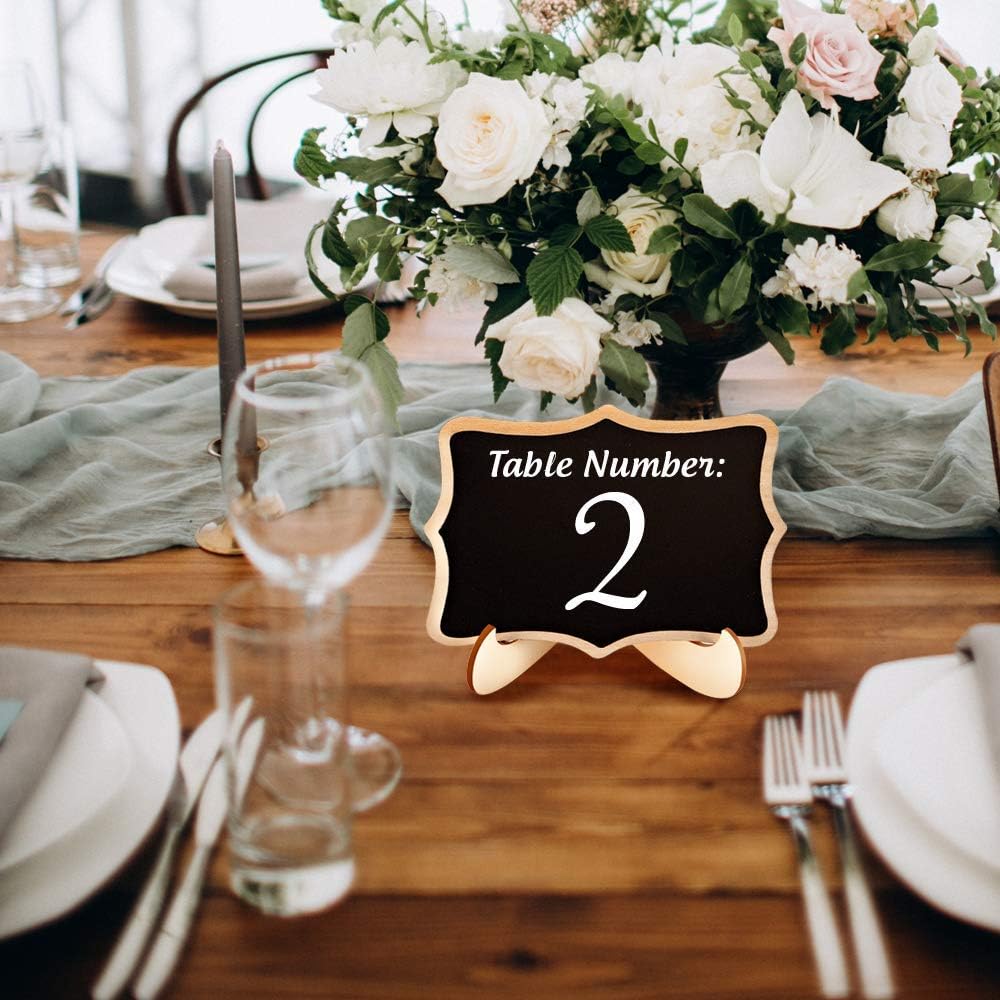
If you’ve ever watched a beautifully hand-lettered daily specials board turn into a ghost town of faded chalk smears by Friday afternoon, you already understand why sourcing matters. A tabletop chalkboard sign is exactly what it sounds like: a small, freestanding board — usually 5 to 14 inches tall — that sits on a table, counter, or bar top to display menus, prices, or promotions in chalk. For a single-location operator, they’re a $10-a-unit decision. For a 12-location group ordering 8 units per location, you’re committing $1,000–$5,000 before freight, and the wrong call means warped boards, ghosting (old lettering that won’t fully erase and bleeds through new writing), and a replacement cycle that eats your margins. This guide is for buyers who are past the “let’s just grab some on Amazon” phase and are building a sourcing strategy that actually survives a year of daily menu changes.
| EDITOR'S PICK6 Sizes/4 Colors - Small Chalkb… | Mid-tierFreestanding Wooden A Frame Dou… | Budget pickDSTELIN 10 Pack Mini Chalkboard… | |
|---|---|---|---|
| Size options | 6 sizes | 10"W x 15.6"H | 10 pack |
| Shape | — | A-frame | Rectangle |
| Double-sided | — | ✓ | — |
| Magnetic | ✓ | — | — |
| Hanging | ✓ | — | — |
| Stand type | — | — | Easel |
| Price | $24.99 | $14.99 | $5.99 |
| See on Amazon → | See on Amazon → | See on Amazon → |
The Core Trade-Off: Surface Material Is Everything
Most operators fixate on frame style or price per unit. The sourcing practitioners who avoid the ghosting problem start with the surface, because that’s where the failure mode lives.
Melamine-coated hardboard is the most common surface in the $8–$30/unit commercial range. Suppliers like Tablecraft Products and American Metalcraft both offer melamine-surface boards in their standard lines. The upside is cost and consistency — melamine is factory-applied and uniform. The downside operators consistently report in long-run reviews is that the coating degrades faster under daily liquid chalk marker use than under traditional dusty chalk. Liquid chalk markers (the opaque, paint-style markers most cafés now prefer for legibility) are water-activated and bond more aggressively than chalk stick; they require a purpose-formulated cleaner — not just a damp rag — to fully clear. When operators skip that step or use the wrong cleaner, melamine boards ghost within 60–90 days.
Lacquered MDF (medium-density fiberboard) with a chalkboard-specific topcoat sits one tier above melamine in durability. MDF, for context, is an engineered wood panel made from compressed wood fibers and resin — denser and more dimensionally stable than plywood, though still susceptible to moisture edge-swelling if the board is stored in a humid prep kitchen. The chalkboard lacquer on quality MDF boards is thicker and more porous than melamine, which actually matters for chalk adhesion and clean erasure. American Metalcraft’s chalk board line and several Etsy commercial-maker options use lacquered MDF for their mid-range boards. Operators in extended-use reviews consistently rate these higher for erasability after six months than melamine equivalents at the same price point.
Tempered glass with a chalk-receptive coating is the premium play. Cal-Mil Plastics offers glass-panel tabletop display systems; a handful of specialty fabricators produce chalk-coated tempered glass tabletop signs for fine-casual and boutique hospitality contexts. Glass doesn’t absorb moisture, won’t warp, and — with the right chalk-receptive coating — erases cleanly even after liquid chalk marker use. The trade-off is exactly what you’d expect: weight (a 9×6-inch glass board weighs 3–4× an equivalent melamine unit), fragility in high-turnover environments, and cost (typically $45–$120/unit versus $10–$30 for melamine).
Real slate occasionally appears in premium tabletop chalkboard sign discussions. Per The Spruce’s overview of chalkboard surfaces, natural slate is the gold-standard erasability surface — it’s what “chalkboard” originally referred to — but at tabletop sign scale, it’s expensive, heavy, and difficult to source in consistent small formats. Most operators who want the aesthetic reach for lacquered MDF over slate for practical reasons.
By the Numbers: Surface Trade-Off at a Glance
| Surface | Typical unit cost | Liquid chalk marker erasability | Moisture risk | Weight |
|---|---|---|---|---|
| Melamine hardboard | $8–$25 | Fair (degrades 60–90 days) | Low | Light |
| Lacquered MDF | $18–$50 | Good (12+ months) | Moderate (edge) | Light–Medium |
| Tempered glass | $45–$120 | Excellent | None | Heavy |
| Natural slate | $60–$150+ | Excellent | None | Very heavy |
Seasoning, Ghosting, and the First-Month Failure Window
“Seasoning” a chalkboard means conditioning the surface before first use by rubbing the flat side of chalk across the entire board and then erasing it — this fills the surface’s microscopic pores so that subsequent writing doesn’t permanently bond into bare surface. The Spruce’s guide on how to season a chalkboard explains the process clearly: if you skip seasoning, the first marks you make will ghost permanently, visible as a faint impression even after erasing. For a single sign, this is an annoyance. For a 96-unit order, it’s a staff training problem.
Here’s where most operator sourcing goes wrong: the signs arrive, a manager pulls them out of boxes, and they go straight to tables with no seasoning. The daily special gets written in liquid chalk marker — which requires no seasoning but does require proper cleaner — and within two weeks there’s a visible shadow of Day 1’s menu under Day 14’s. Ghosting from improper first use is almost never covered by a supplier’s warranty.
The operational protocol that prevents this:
- Designate a single person responsible for new board prep.
- Lacquered MDF boards: season with chalk stick before any liquid chalk marker is ever used on a new board.
- Melamine boards: confirm with your supplier whether their coating is pre-seasoned (some are) or requires conditioning.
- Use only purpose-formulated liquid chalk board cleaner — not Windex, not a dry rag, not water alone.
- Document the cleaning product as a standard supply item in your ordering system so it never goes on back-order.
This sounds like operational detail, not sourcing strategy. It is both. The supplier you choose should be able to tell you whether their boards require seasoning and what cleaners are compatible. If a sales rep can’t answer those questions, that’s a signal about the rest of their commercial support.
Sourcing Channels and What Each One Gets You
American Metalcraft is the most accessible commercial-grade option for U.S. operators. Their tabletop chalkboard sign line (referenced in their 2025 product catalog) includes A-frame and flat-panel formats in multiple sizes, with melamine and lacquered surfaces. Lead times from their distribution network are typically short — 3–7 business days for standard SKUs — and they’re widely available through foodservice distributors (Sysco, US Foods, and regional broadline distributors all carry some of their display line). The trade-off: their entry-level melamine units are workhorses, not showpieces. For a fast-casual or counter-service context where the board gets handled dozens of times a day, that’s the right call. For a wine bar or boutique hotel lobby, the aesthetic may feel utilitarian.
Cal-Mil Plastics skews slightly more design-forward. Their commercial display systems, per the 2025 catalog, include acrylic and glass-panel tabletop options with chalk-receptive surfaces alongside traditional chalkboard formats. Cal-Mil’s strength is systems — they sell coordinated display collections so your tabletop chalkboard sign, your menu tent, and your counter display unit share a visual language. For operators building out a cohesive front-of-house design, that matters. Per-unit cost runs roughly 20–40% higher than American Metalcraft’s comparable volume, but the design consistency can reduce what you’d otherwise spend on custom fabrication.
Tablecraft Products occupies a similar tier to American Metalcraft on price and distribution breadth. Their commercial specification guide highlights NSF-listed display products — NSF/ANSI Standard 2 (the food equipment safety certification, meaning the materials and construction are evaluated for use in food service environments where incidental contact with food or food-contact surfaces may occur) is relevant if your boards are used on food-service surfaces rather than purely decorative display tables. Not every chalkboard sign needs NSF compliance, but if your inspector cares about it, Tablecraft is one of the easier places to find documentation.
Etsy boutique makers and small fabricators are worth a serious look for the $400–$900 designer segment and for operations where differentiation is part of the value proposition. Several commercial-capable Etsy shops produce lacquered MDF tabletop chalkboard signs in custom sizes, with solid-wood or powder-coated metal frames (powder coat is a baked-on finish applied electrostatically, more durable than spray paint and chip-resistant under daily handling). The sourcing risk is lead time and minimum order inconsistency — a maker producing 12 units for your opening week is different from one set up to fulfil a reorder of 24 units on a 2-week turnaround. Before committing, ask explicitly: What is your reorder lead time for an existing SKU? What’s the longest you’ve run a single design in production? Can you provide a reference from a commercial account?
The NSF Compliance Question: When It Matters and When It Doesn’t
Foodservice Equipment Reports’ March 2025 front-of-house display trends piece notes increased health department scrutiny of display materials in direct-contact or near-contact positions — particularly in states that follow FDA Food Code guidance closely. NSF/ANSI 2 certification means a product’s materials, coatings, and construction have been independently evaluated for food-equipment suitability. For a tabletop chalkboard sign sitting at a café table — not contacting food directly — most operators don’t face a compliance requirement. But if your board is positioned on a prep counter, inside a display case adjacent to unpackaged food, or in a self-service food area, your inspector may flag an uncertified display product.
The practical sourcing implication: if there’s any ambiguity about your placement context, source from suppliers who can provide NSF documentation (Tablecraft is a reliable option here). If your boards are purely table-top decorative and never near food prep, you have more surface-material flexibility — and can prioritize erasability and aesthetics over certification.
Decision Rules: If X, Then Y
If you’re ordering 50+ units for a fast-casual or counter-service group with daily erasure and no design premium requirement: Start with American Metalcraft’s lacquered hardboard line, not melamine. The cost delta is modest at volume, and the 12-month erasability advantage more than covers it in avoided replacement cycles.
If front-of-house design coherence matters and you’re willing to pay 20–40% more per unit: Cal-Mil’s coordinated display system gives you visual consistency across sign types without custom fabrication costs.
If NSF compliance is a documented requirement from your health department or corporate facilities team: Tablecraft is your lowest-friction path to documentation.
If you’re outfitting a boutique, wine bar, or high-design concept where the sign itself is part of the brand story: Budget for lacquered MDF from a vetted small fabricator or designer supplier, confirm reorder capability before your opening order, and specify powder-coat or solid hardwood frames explicitly.
If ghosting has already happened on your current fleet: The boards aren’t necessarily ruined. Per aggregated owner reports, a deep clean with a purpose-formulated chalkboard cleaner (not a general-purpose cleaner) followed by a full re-seasoning cycle recovers melamine boards to functional — if not perfect — condition. If that doesn’t clear the ghost, you’re replacing, not rehabilitating.
The sourcing decision on tabletop chalkboard signs is smaller than most front-of-house purchases but fails more visibly than almost any of them. A warped board or a ghost-riddled surface is the first thing a guest sees when they sit down. Getting the surface specification, the cleaning protocol, and the reorder relationship right the first time costs the same as getting it wrong — and saves you the quiet embarrassment of menus that look like palimpsests by mid-week.